
Seed oils are your friend!

Introduction
The interweb has declared seed oils are the baddest of the bad. The thinking behind this demonisation of the “hateful 8” (canola, corn, cottonseed, grapeseed, rice bran, safflower, soybean, and sunflower oil) is that:
Their constituent omega-6 fatty acids are inflammatory and cause chronic disease.
Even worse, they suppress the beneficial effects of omega-3s.
Chemicals used to process the oils for consumption cause further toxicity.
Substances created when they’re heated are dangerous.
If you live in the modern world, these claims have probably crossed your radar and are subject to very little mainstream pushback. But before we get into that, let’s clarify one thing. Grouping seed oils by their origin is overly simplistic, as they have quite different compositions. You can see that the fatty acid profile of “hateful 8” member safflower is almost identical to the ever-lauded olive oil and very different to, say, grapeseed. Linoleic acid, the omega-6 found in seed oils is the cause of all the angst and is shown in red. It comprises by far the majority of polyunsaturated fat in the diet, with omega-3s making up almost all the remainder.
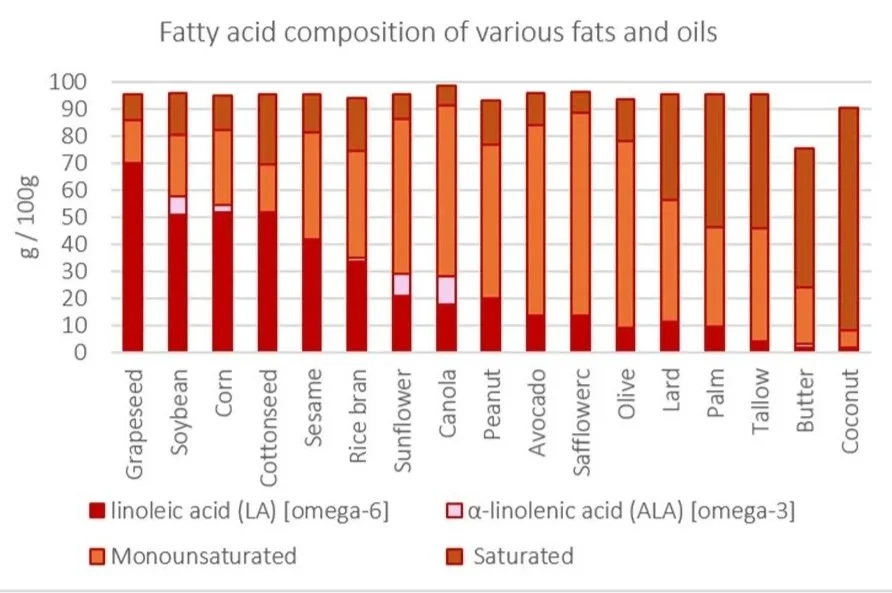
Fatty acid profile of different edible oils and fats. Data Source: US Department of Agriculture, Food Data Central (Ref)
Claim 1 - Seed oils cause chronic disease and are inflammatory
This is false
Seed oil PR needs to up its game. A substantial amount of research into linoleic acid, specifically, and seed oils generally, has failed to find they’re harmful. In fact, it shows they’re consistently associated with better health outcomes.
In both controlled trials and population studies, seed oils are linked with lower risk of chronic diseases including cardiovascular disease, heart attack, stroke and diabetes. (Ref, Ref, Ref) Given the prevalence of these conditions it’s not surprising that higher intakes of plant-based oils, especially olive, canola and soybean oils*, were associated with lower risk of premature death from all causes. (Ref, Ref)
In its 2026 dietary recommendations, The American Heart Association stated that:
“evidence consistently demonstrates that replacing sources of saturated fat with sources of polyunsaturated fat and, to a lesser extent, sources of monounsaturated fat reduces low-density lipoprotein cholesterol concentrations, a causal risk factor for CVD.” (Ref)
So seed oils are not only cardioprotective, but the Heart Association suggests cardiovascular benefits are stronger than those of olive oil.
Much of the benefit comes from the displacement of saturated fat from the diet, but polyunsaturated oils, namely seed oils, also reduce harm from the saturated fat remaining in the diet by depressing low-density lipoprotein (LDL) cholesterol. In this they appear more effective than monounsaturated oils, such as olive oil. (Ref, Ref, Ref)
With regard to claims they’re inflammatory, this stems from the truth that linoleic acid may be enzymatically converted into arachidonic acid, which may then be converted into proinflammatory agents. May being the operative word. Varying linoleic acid intakes do not change arachidonic acid levels which are tightly controlled in the body. (Ref) This may explain why randomised controlled trials find that linoleic acid does not increase inflammation, while most trials also show no effect of linoleic acid intake on markers of oxidative stress. (Ref, Ref)
Again the AHA clarifies the evidence, stating there is:
“little direct evidence to support a net proinflammatory, proatherogenic effect of LA in humans.” (Ref)
Beyond social media, the benefits of omega 6 are well recognised. The World Health Organisation advises linolenic acid should comprise 4 - 9.5% of daily energy intake and, similarly, the Australian dietary guidelines include an adequate intake of 8 g/d and 13 g/d for men and women, respectively. (Ref, Ref) As the chart below shows, most nations are eating within the WHO guidelines.
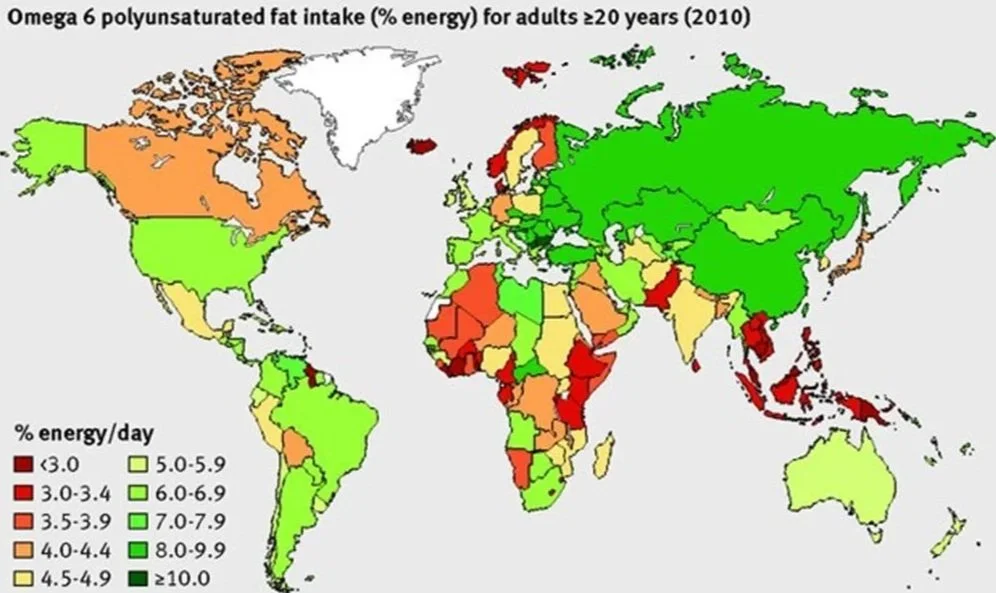
Global polyunsaturated omega-6 intake. Micha et al (2014). (Ref)
Claim 2 - But doesn’t omega-6 interfere with omega -3?
The evidence does not support this claim.
Some people, including some scientists, suggest it’s the ratio of ingested omega-6 : omega-3 that’s the problem. This ratio is often invoked with many opining that the pre-industrial diet would have contained a much lower ratio than today’s processed diets and this explains the rise in chronic disease. But this is an association only.
The second prong to this argument is mechanistic. Below is a greatly simplified flow chart of the parallel omega-6 and omega-3 pathways, which produce pro-and anti-inflammatory agents, respectively.
Both pathways are vital, but the hitch is that common enzymes are involved in both pathways. Thus, the theory goes that high intakes of linoleic acid monopolise all available enzymes and so crowd out the conversion of ALA to EPA and DHA.
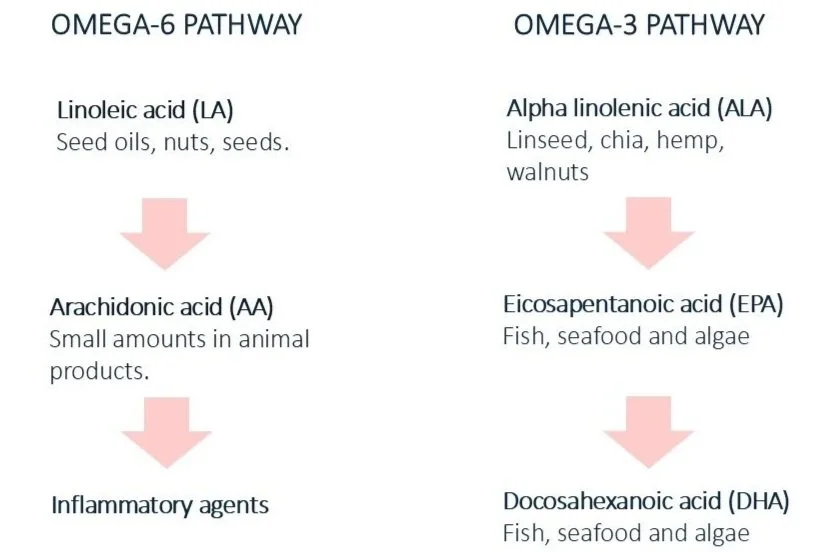
Conversions of omega-3 and omega-6 in the body.
But while plausible, clinical trials suggest this is not the case. As we’ve outlined, higher intakes of seed oils (and the omega 6 therein), do not lead to higher arachidonic acid levels, therefore higher linoleic acid apparently does not lead to greater demand for enzymes.
Meanwhile, evidence suggests that the rate of ALA conversion is stable at a range of ALA intakes, regardless of linoleic acid intake. Therefore, absolute intakes of ALA determine the amount converted to EPA rather than intake relative to LA. (Ref)
Overall though, while genes, sex and menopausal status all have an influence, conversion rates are generally low, especially to DHA, hence including sources of preformed EPA and DHA in the diet is advised. To be covered in the next article.
Practically also, in Australia intakes of ALA are modest while EPA and DHA intake from marine sources is adequate, so little conversion is required. (Ref) The charts following show this, where green roughly correlates to adequacy. (Ref)
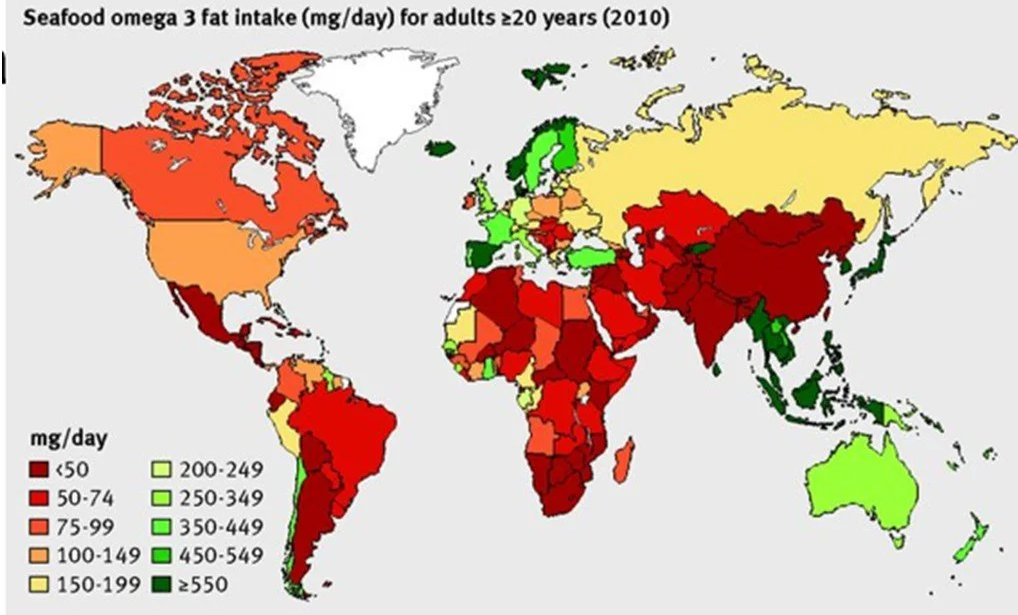
Marine based omega-3 intake. Micha et al (2014). (Ref)
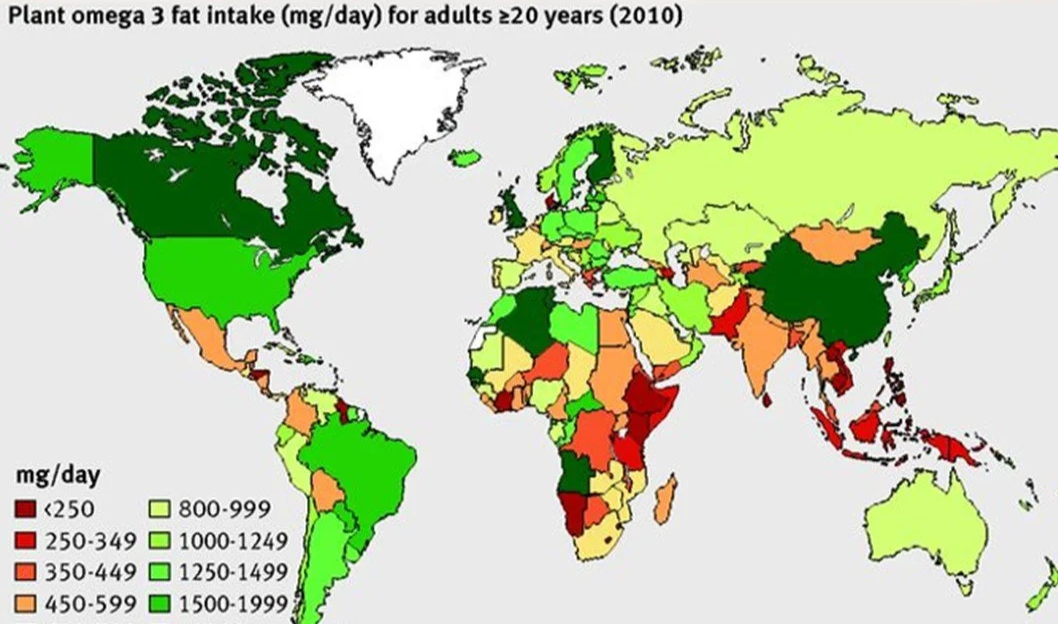
Plant based omega-3 intake. Micha et al (2014). (Ref)
What about the stuff they use to make it?
Feasibly true, but no known adverse events from consumption have been observed.
Seed oils are commonly extracted using hexane, a neurotoxin. Knowledge of its effects has been gained from the experience of occupationally-exposed workers chronically exposed to hexane. Some 60% of hexane is accounted for in seed oil production, but it’s also used to produce other oil based foods, pharmaceuticals and cosmetics. While hexane is removed from the final product, hexane-derived metabolites have been measured in the urine of the general population, suggesting removal may not be absolute. However, despite the presence of metabolites, there was no evidence of neurotoxicity in these people. (Ref)
Australia already has a relatively tight controls on the amount of hexane permitted in food at 0.3 mg/kg, roughly a third of the EU limit (currently under review), whereas the US has no formal threshold. (Ref)
And are they safe to cook with at high temperatures?
A possible concern.
With age, heat and light, oils degrade and release compounds, technically known as total polar compounds, or TPC. Admittedly, it’s hard to measure chronic TPC exposure in people, but evidence suggests consuming degraded oils may induce oxidative stress, central adiposity and hypertension. (Ref, Ref)
Oil ageing, light exposure, reuse and the storage of cooked fried food, all increase TPC. Oil reuse is of particular concern in commercial kitchens and, in 2026, there’s no enforced standard in Australia for TPC levels. (Ref) Overseas the common standard is that frying oil has to be replaced when TPC reaches 25% of the oil’s weight. (Ref) As seed oils are relatively cheap, thanks partly to hexane use, they are a common choice for commercial deep-fat fryers. (Ref)
Of course, home cooks can’t measure TPC, so the smoke point can be an proxy. However, it doesn’t align perfectly with TPC and it’s a subjective measure. Generally, more refined oils and more saturated oils tend to have higher smoke points, so ghee for example, is both refined and high in saturated fat and has its high smoke point of 250°C reflects this. (Ref) But smoke point doesn’t tell the whole story. The following three charts come from an Australian study of ten cooking oils and show smoke and TPC assessed at different temperatures and over different time periods.
The first thing to note is that, for most cooking, the temperature is below the smoke point. In the study, based on smoke point, grapeseed looks like the winner, but it performs less well when assessed by the more accurate TPC measure. If oil is heated above 150°C, which can occur with baking, grilling and frying, TPC starts tin rapidly rise. Here extra virgin olive oil and peanut oil perform best. The time factor is more likely to be relevant in commercial deep fryers, where deep fat frying is typically 160-180°C, as in the experiment and oil can be heated and reheated for long periods. (Ref, Ref)
You may be tempted to try coconut oil based on this analysis as it performs well on TPC and smoke point (though TPC renders smoke point redundant). But that would be a poor choice. Coconut oil is high in saturated fat and the research evidence of the harms of saturated fat, far outweigh that for any harms from TPCs. A better strategy would be to store oil appropriately; use it promptly; cook at lower temperatures where feasible; and choose an oil such as peanut or extra virgin olive oil for hotter projects.
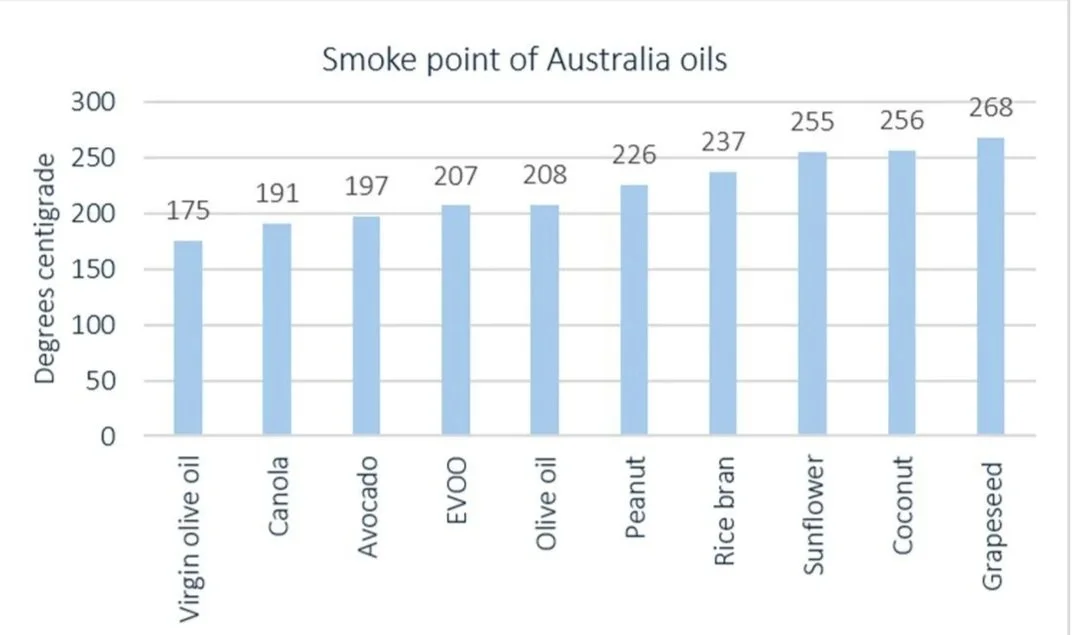
Different smoke points of Australian oils
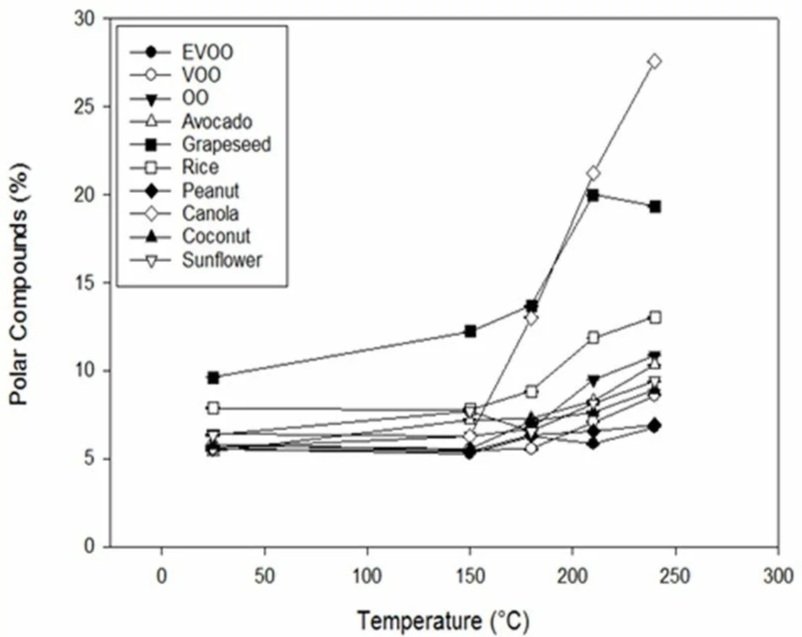
The development of polar compounds in different oils when exposed to increasing temperature. Source: Guillame and Ravetti (2018). (Ref)
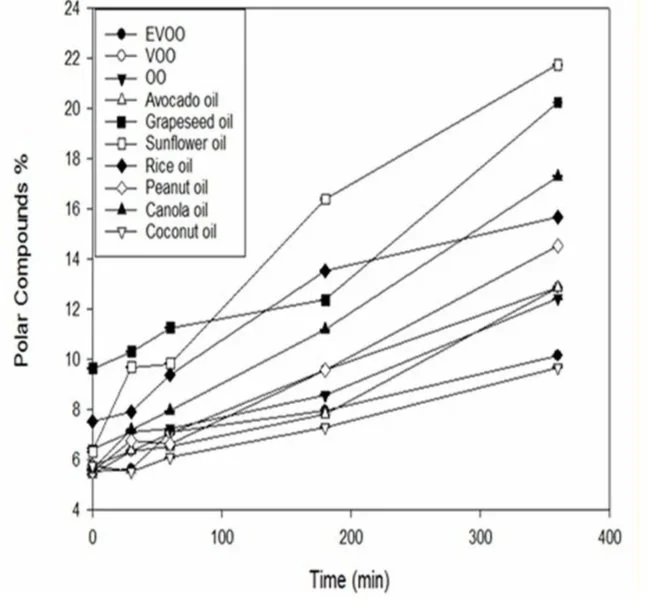
The development of polar compounds over 400 minutes in different oils when heated at 180°C. Source: Guillame and Ravetti (2018). (Ref)
Conclusion
It’s a poor indictment on popular culture that the any seed oil bandwagon has been able to gather so much steam. And that tallow (saturated animal fat) is suggested as a better alternative without much of a murmur.
But seed oils are associated with lower incidence of several common diseases and lower risk of premature death and this is backed by evidence from both observational and clinical trials. And it’s important to bear in mind that this association exists regardless of any possible detriment from consuming degraded oils. As to interference with the omega-three pathway and toxicity from the solvents used in seed oil production, there is no evidence that these factors cause harm.
Are you ready to welcome seed oils back into your life?
