
Fermented foods and why you should eat more of them
Introduction
Let’s take a closer look at fermented foods (implicitly fermented beverages too). Ferments have been around for thousands of years and likely arose by accident, and independently, in many different cultures and locations. A happy accident indeed and perhaps a not insignificant contributor to humankind’s success as they allowed food preservation and thus survival in lean times; enhanced the nutritional value of many common foodstuffs; and added flavour to what must have sometimes been a quite boring diet. Imagine our forebears’ delight too in discovering the relaxing powers of a fermented fruit tonic (wine) at the end of a hard day of subsistence. Ferments can be thought of as the less mannered cousins of probiotics and postbiotics (discussed here and here), as they can include both live and dead beneficial micro-organisms and even something for them to eat (analogous to prebiotics, see here). Evidence of their health benefits is not always robust, nonetheless, evidence there is. While our survival over the winter is no longer generally at stake, humans have probably adapted to gain from ferments in our diets and we might all benefit from including a greater quantity and variety of them on our plates.
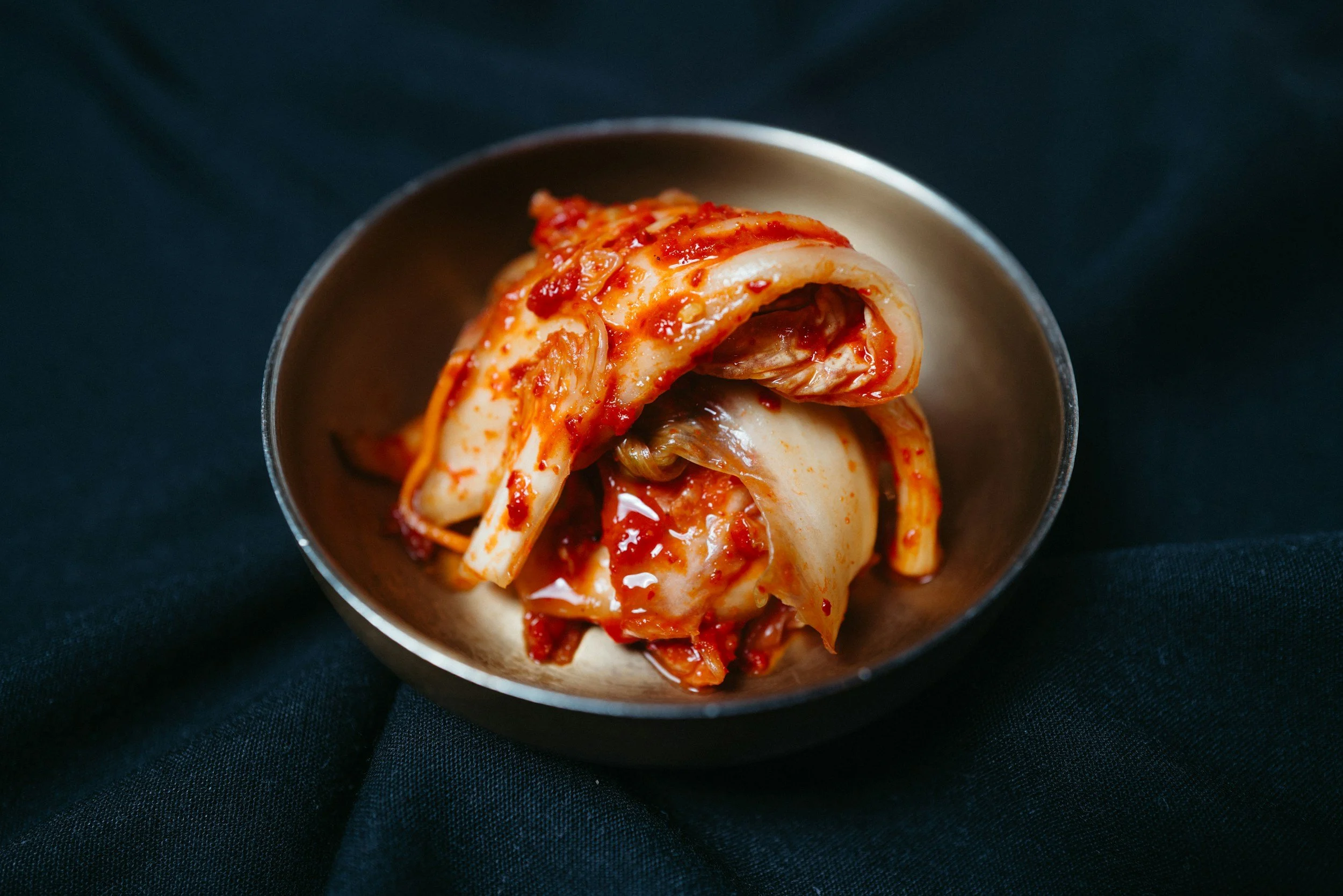
Let's kick off with some kimchi. Its sour spicy flavour adds dimension to savoury dishes
What are fermented foods?
The International Scientific Association for Probiotics and Prebiotics defines fermented foods as “made through desired microbial growth and enzymatic conversions of food components” (Ref). And there are thousands of them. Many are rather niche and you probably won’t have heard of them, but some like, cheese, yoghurt, wine, vinegar, soy sauce, sourdough, miso, kombucha, chocolate and coffee are commonplace.
Production proceeds along common lines: Specific microbes either occur naturally or are introduced (via inoculation or back slopping) into a food, technically called the substrate, and temperature, pH, oxygen, and humidity are controlled to various degrees to allow the desired microbes to proliferate. Sugar might be added to encourage microbial growth, as occurs with kombucha and kefir, while salt is a common additive in lactobacillus-based ferments, as these bacteria are salt tolerant, while less suitable microbes usually are not. As the initial microbes begin to proliferate, they crowd out unwanted microbes and often produce substances, such as acids, alcohols and bacteriocins, that further discourage interlopers. (Ref)
Ferments: like an external microbiome
While it’s not quite the same, fermented foods can be thought of as analogous to the fermentation of food by our gut microbes .
The fermented food substrate is similar to a prebiotic as it feeds the desired microbes, while other prebiotic analogues can arise from microbial fermentation, which, just like in the gut will, in turn, allow secondary species of desirable microbes to thrive.
Micro-organisms ferment the substrate and may be present in the finished product if not deactivated by heat or other processing. Also, certainly present in the finished product will be dead micro-organisms or parts thereof, either the result of natural attrition or deactivation. While this sounds very like pro or postbiotics they usually do not technically qualify and if they claim to on the label then the following should be the case:
Probiotics/Postbiotics (Ref)
Identified to strain level
Genome sequence available
Present in levels able to deliver benefit (and alive in the case of probiotics)
Evidence for health benefit

And presenting natto, a Japanese delicacy and unparalleled for vitamin K2 content.
Which microorganisms can make fermented foods?
The answer is very many. The most common bacteria are those that produce lactic acid, but other bacteria, yeasts and fungi can also ferment the food. The table below is just a subset of common starter culture organisms. Note too that the conditions created by the initial microbes encourage proliferation of secondary microbes, which also have a part to play in the resulting fermented food’s taste and health attributes.
| Micro-organism | Food |
|---|---|
| Lactic acid bacteria | |
| Lactobacillus delbrueckii subsp.bulgaricus | Cheese, yogurt |
| Lactobacillus sanfranciscensis | Sourdough bread |
| Lactobacillus casei | Cheese, cultured dairy products |
| Streptococcus thermophilus | Cheese, yogurt |
| Pediococcus acidilactici | Sausage, fermented vegetables |
| Tetragenococcus halophila | Soy sauce |
| Oenococcus oeni | Wine |
| Leuconostoc lactis | Cheese, cultured dairy |
| Other bacteria | |
| Brevibacterium linens | Cheese: provides surface colour |
| Propionibacterium freudenreichii subsp.shermanii | Cheese: makes cheese eyes |
| Staphylococcus carnosus subsp.carnosus | Meat: acid, flavour, colour |
| Fungus | |
| Penicillium camemberti | Cheese: Adds ripeness and the white surface |
| Penicillium roqueforti | Cheese: Adds the blue veins |
| Aspergillus oryzae | Soy sauce, miso |
| Rhizopus microsporus subsp.oligosporus | Tempeh |
| Yeast | |
| Saccharomyces cerevisiae | Bread: produces carbon dioxide |
| Saccharomyces pastorianus | Lager beers |
| Saccharomyces cerevisiae | Wine |
Loving the sourdough origin story. Data source: Hutkins et al (2006). (Ref)
Let’s look at an example:
Tempeh
Tempeh originated some 400 years ago in Indonesia and is the product of fungal Rhizopus inoculation into cooked soybeans (although various other legumes have also been successfully used in less traditional versions). The soybean prebiotics are digested by the Rhizopus to produce metabolites including amino acids and B vitamins. At the same time other microbial species present in the soybeans, particularly lactobacillus, proliferate and contribute to the final nutritional profile. (Ref, Ref) It has been consistently observed across fermented foods that, provided the same conditions are met, that is, the same, microbes, food substrate, temperature, pH, humidity etc, the composition of the resulting microbial community is highly consistent resulting in a predictable product. (Ref) Besides benefits conferred by its microbial content and metabolites, fermentation also partially digests the beans to reduce gas production and increase protein, mineral and isoflavone bioavailability, (isoflavone is linked to lower risk of hormone-related cancers and higher vitamin K2). (Ref) Just like postbiotics, often tempeh is pasteurised before sale and thus contains minimal live microbes.
And here it is:

Tasty tempeh in traditional banana leaves
A note on taste:
The next section outlines health attributes of fermented foods. Given the diversity of microbes and substrates, the most gain will come from including a great variety in your diet. However, many fermented foods, tempeh included, have a strong and distinctive taste. This accounts for much of their appeal in their cultures of origin but might take a few tries for the newcomer. Come on now, you’ve done it before. Fermented foods you may have learned to like very much include wine, beer and coffee, sauerkraut, kimchi and miso. I’ll assume chocolate was always acceptable, but you might not even have been too keen on plain yoghurt or sourdough at first. Or what about blue cheese? Amongst these foods are probably some that you particularly value for their unique taste now. So, if you want to incorporate new fermented foods in your diet (and you should!) give it a few tries before you decide whether you like it or not.
Health benefits
Most of the health benefits of ferments in humans come from observations that people who eat more of such foods tend to have lower rates of chronic disease than those that don’t. As chronic disease develops over decades, it’s difficult to conduct an interventional trial directly testing the effect of fermented foods on disease risk in humans (this is an overarching theme in nutrition) but the effects of fermented foods on chronic disease biomarkers (for instance blood sugar when assessing diabetes risk) has helped support the health case for ferments.
Taking the cumulative body of evidence, the following summary from a recent review shows the best evidence for various ferments. As fermented dairy is the most widely eaten fermented food and by far the most studied, it tends to appear favourably in these studies, but that is not to say accumulating evidence won’t, in time, find other fermented foods are equally beneficial. (Ref)
| Condition | Ferment | Level of evidence |
|---|---|---|
| Metabolic Syndrome | Yoghurt | Strong |
| Kimchi | Strong | |
| Kefir | Strong | |
| Kochujang | Strong | |
| Diabetes | Yoghurt | Moderate |
| Kimchi | Moderate | |
| Vinegar | Strong | |
| Komucha | Weak | |
| Kefir | Strong | |
| Cardiovascular disease | Kefir | Moderate |
| Cheese | Moderate | |
| Yoghurt | Moderate | |
| Kimchi | Moderate | |
| Fermented apple puree | Weak | |
| Cancer | Cheese | Weak |
| Yoghurt | Weak | |
| Other fermented dairy | Moderate | |
| Neuropsychiatric conditions | Cheese | Moderate |
| Yoghurt | Moderate | |
| Immune disease | Yoghurt | Moderate |
| Other fermented dairy | Moderate | |
As a reminder: Metabolic Syndrome is a cluster of risk factors comprising excess abdominal weight, elevated cholesterol and/or triglycerides, high blood pressure and elevated blood glucose. (Ref)
Where do these benefits come from?
Here, it looks like ferments deliver on a few fronts.
Reason One: Benefits from the microbes and their metabolites
While they may not qualify as pro and postbiotics in the strictest sense, regular ingestion of ferments is likely to be accompanied by many of the benefits of these more pharmaceutical products (see here and here). This entails not only improved gut immune function but also ingestion of microbial metabolites where a plethora of potential gains both in the gut and throughout the body have been posited.
Reason Two: Benefits of enhanced nutrient content
You may be surprised to know that many vitamins you buy as supplements are produced by microbial fermentation, which is cheaper and more sustainable and makes many vitamins more accessible in less developed countries. (Ref)
The organic nature of many ferments means they can’t make health claims about their vitamin enhancing powers, never the less, the B vitamins and vitamin K are good examples of vitamins that can be enhanced when particular strains are used. (Ref) For instance, Rhizopus increases the riboflavin and nicotinic acid (vitamins B2 and B3) content of tempeh.
Meanwhile fermentation of various types of cereals using L. plantarum and Bacillus subtilis. can generate antioxidants such as flavonoid and phenolic acids. (Ref)
Let’s take vitamin K2 as another example.
Vitamin K
Vitamin K2, derives from bacterial fermentation and is very well absorbed when consumed. Natto is a standout source of vitamin K2 but it’s also found in cheese, particularly Swiss cheese. Vitamin K2 helps preserve cardiovascular and bone health and indeed observational evidence supports the benefits of natto and Swiss cheese in those at risk of osteoporosis as well as, to a lesser extent, heart disease. (Ref, Ref, Ref, Ref, Ref).
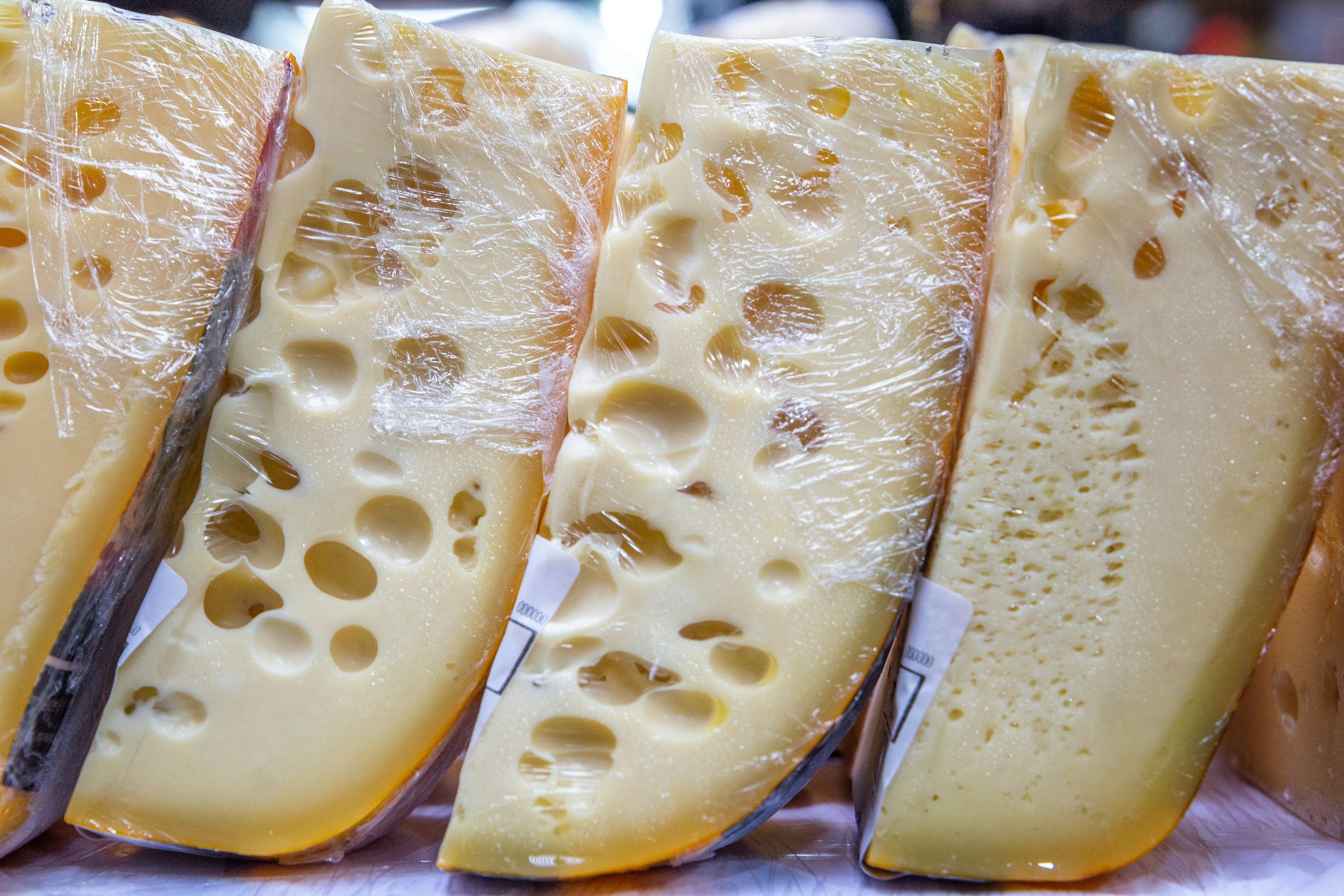
The specific bacterial culture in Swiss cheese is responsible for the distinctive "eyes" and also produces superior levels of vitamin K2.
Reason Three: Nutrient bioavailability and digestibility
Several factors are relevant here when it comes to the proportion of food nutrients absorbed by the body.
Antinutrients: Some foods, such as beans, grains, and seeds contain (the rather pejoratively and misleadingly named ) antinutrients, including phytates, oxalates and tannins, which can bind to minerals such as iron and zinc to reduce absorption. Fermentation breaks down antinutrients, freeing minerals for absorption.
Iron: plant iron is typically less well absorbed than iron from animal-based foods. However fermented foods tend to be acidic which enhances iron absorption (this is why iron-rich plant foods eaten with vitamin C – ascorbic acid – increase iron absorption).
Fibre: plant fibre (despite its many contributions) can physically limit mineral and nutrient availability, again, an issue that fermentation can remedy by partially breaking down the fibre.
Fermentation can also improve carbohydrates and proteins digestibility by partially breaking them down before they’re consumed. One benefit of this is for the lactose intolerant who might find they can better tolerate yoghurt and cheese, as the lactose is already partly digested. (Ref, Ref)
Conclusion: Fermented Foods as Functional Systems
Fermented foods are not merely single foods but complex food systems shaped by microbial activity. While much of the evidence for their health benefits is observational, it certainly exists in growing quantity, while controlled trials convincingly link ferments to improvement in many chronic disease biomarkers. Ferments are affordable, widely accessible, culturally embedded, and can add new dimensions to a meal. Given humanity’s long co-evolution with fermented foods, and the breadth of plausible mechanisms by which they may confer benefit, increasing both the quantity and diversity of fermented foods in the diet appears to be a low-risk, potentially high-reward means to level-up your health.
