
Fishy business

Last time we talked about omega-6 fats, namely seed oils. So, it seems a good opportunity to discuss omega-3 fats, specifically long chain omega-3s (LC omega-3s), and even more specifically, eicosapentanoic acid (EPA) and docosahexanoic acid (DHA), those LC omega-3s found in oily fish.
We all know by now that we should be eating LC omega-3s to keep us healthy into our old age but are they so indispensable? And, if they do have benefits, what are they; how much do we need to make a difference; and how does that translate into food? Wonder no more, I’ve got you covered
What LC omega-3s can do
Long-chain omega-3 fatty acids are found throughout the body and are particularly abundant in the heart, nervous system, retina and spermatozoa, providing an inkling as to their possible benefits. (Ref, Ref) Research shows they can reduce any and all of triglycerides, cholesterol, insulin resistance, blood pressure, liver enzymes, inflammatory markers and oxidative stress. (Ref) The basis of these benefits appears to be that the long chains of LC omega-3 molecules confer flexibility when they’re incorporated into cell membranes; they have many double bonds, which can participate in numerous biochemical reactions; they displace deleterious saturated fatty acids in the body; and, of course, they’re a source of anti-inflammatory substances. (Ref)
Translating these actions into disease reduction, observational trials find LC omega-3 s are linked to lower death rates from heart disease, cancer and all other causes combined. (Ref) But yet. There have now also been many large, well-designed and well-funded interventional trials investigating possible health benefits of LC omega-3s (invariably using supplements), which, despite the effort and resources employed, have rarely been conclusive. This may be due to trial design issues (such as dose and formulation, duration, subject selection and subject compliance) or it may be because the benefits of fish consumption come from other nutrients, such as iodine and selenium, or that LC omega-3 consumption is accompanied by other healthy behaviours, for instance, lower red meat intake. While this is an evolving area, the conditions where the claims for LC omega-3 benefit are most convincing are:
Cardiovascular disease
Depression
Mild cognitive impairment in older age
Preventing premature birth
Foetal and child visual development
Rheumatoid arthritis
Systemic Lupus Erythematosus
We’ll look at these in more detail during this article.
The LC omega-3 pathway
As we discussed in the last article, humans are inefficient converters of alpha-linoleic acid (ALA) into EPA and DHA. Below is a reminder of how this works.
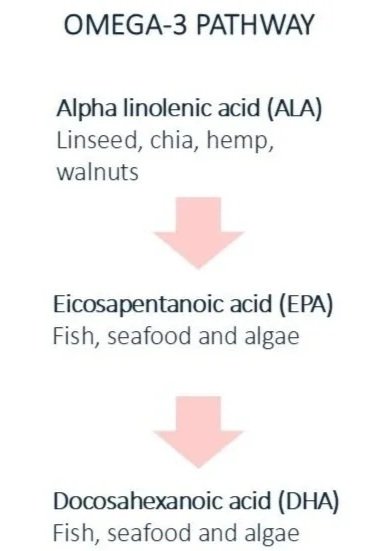
Depending on a number of factors, ALA may be partially converted to EPA but generally very little is converted to DHA. Also DHA may be retro-converted to EPA.
It does appear though that EPA increases linearly with ALA intake, while DHA is very difficult to budge.
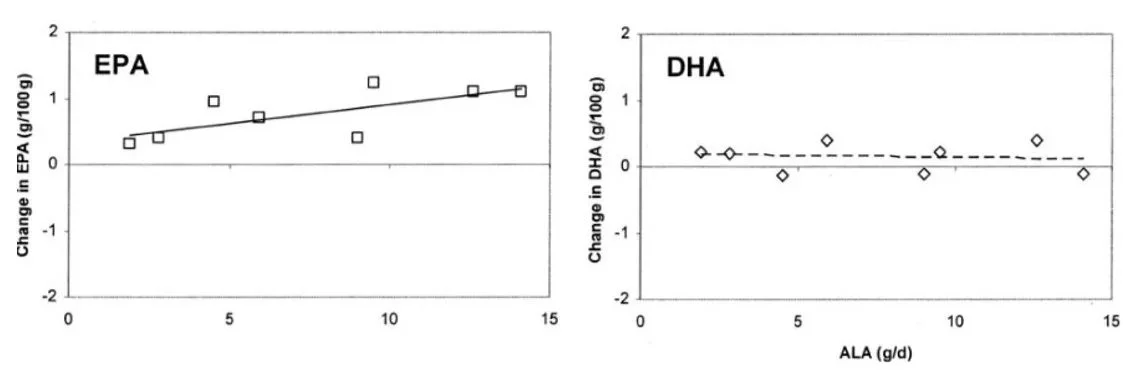
Pooled data showing changes in blood levels of EPA and DHA in subjects fed ALA. EPA increases linearly but DHA does nothing much. Source: Arterburn et al (2006). (Ref)
In young premenopausal women, estimated average conversion of ALA to EPA and DHA may be as much as 21% and 9%, respectively. This cohort represents the high water mark for conversion, thought to be related to foetal and newborn needs for DHA. (Ref) Estrogen appears responsible for these higher rates, so in men and post-menopausal women conversion of ALA to EPA is no more than 8%, while conversion to DHA is negligible, though hormone replacement therapy can somewhat improve rates. (Ref, Ref, Ref)
Therefore, it’s feasible that consuming reasonable amounts of ALA can raise your EPA to equivalent levels as those attained by consuming direct sources of EPA, however attaining equivalent DHA is virtually impossible for most people. (Ref, Ref)
While there is debate over how much DHA is required for optimal adult function, and further evidence that people with low intake, such as vegetarians, can upregulate conversion if needed, (Ref) for now, a direct source is generally advisable.
How much omega-3 is enough?
The National Health and Medical Research Council (NHMRC) publishes adequate intakes for combined EPA and DHA intake but these are quite old and lower than other more recent recommendations. The exception is pregnancy recommendations, which reflect the latest evidence. Fortunately, various health bodies have published their own guidance. These are useful as they summate the aggregate evidence in each field. (Ref), (Ref) Once they’re included in guidance, the evidence is usually both strong and the recommendations safe, but this requirement for relative certitude means less irrefutable evidence is usually omitted.
The guidelines below are set on daily intakes but they work just as well incorporated into two or three weekly serves of oily fish instead. Here they are:
The National Heart Foundation (Australia): 0.5 g/day EPA + DHA (as 2-3 serves of oily fish or supplements) plus 2 g/day ALA to lower heart disease risk; 1.0 g/day EPA + DHA plus 2 g/day ALA* for people with diagnosed heart disease; and 1.2–4.0 g/day EPA + DHA for people with high triglycerides. (Ref) The latter category is treated with a prescription medication of icosapent ethyl, a highly purified form of EPA, commercially branded as Vazkepa. (Ref, Ref) The American Heart Association has published almost identical advice. (Ref)
International Society for Nutritional Psychiatry: 1–2 g/day EPA or EPA + DHA (where EPA by weight comprises more than two-thirds of the formulation) for the treatment of major depressive disorder. (Ref)
National Health and Medical Research Council (Australia): 800mg DHA and 100 mg/day EPA in pregnancy to prevent preterm birth.
Global Organization for EPA and DHA Omega-3s (GOED) (industry consensus): 700 mg/day EPA+DHA for both pregnant and breastfeeding women, of which at least 300 mg should be DHA to aid brain and eye development via breastfeeding. (Ref)
*This table from the Australian Heart Foundation shows the ALA content of various foods. If you consume a serve of any two of walnuts, chia, linseed or any seed oil daily, you would attain 2 g.
In summary, in the absence of heart disease, 0.5-1 g/d of combined EPA + DHA (from food or supplements) plus 2 g/d of ALA are optimal targets. With rare exceptions DHA and EPA come as a package, but EPA appears more important for most purposes, while DHA comes to the fore during pregnancy and breastfeeding.
Please translate this into food.
Seafood is the major food source of EPA and DHA. Eggs usually include minor amounts, however, chickens are efficient converters of ALA to LC omega-3, so linseed enrichment of their diets can increase egg EPA and, most usefully, DHA. Hens whose diets contained 15% by weight of linseed produced eggs containing ~90 mg DHA per egg, three times more than standard eggs. In all, these eggs contained about ~110 mg of LC omega-3s, so not enough to replace seafood in the diet. (Ref)
The chart below summarises some published data of seafood EPA + DHA content. The Australian Heart Foundation also includes a comprehensive list of different foods here.
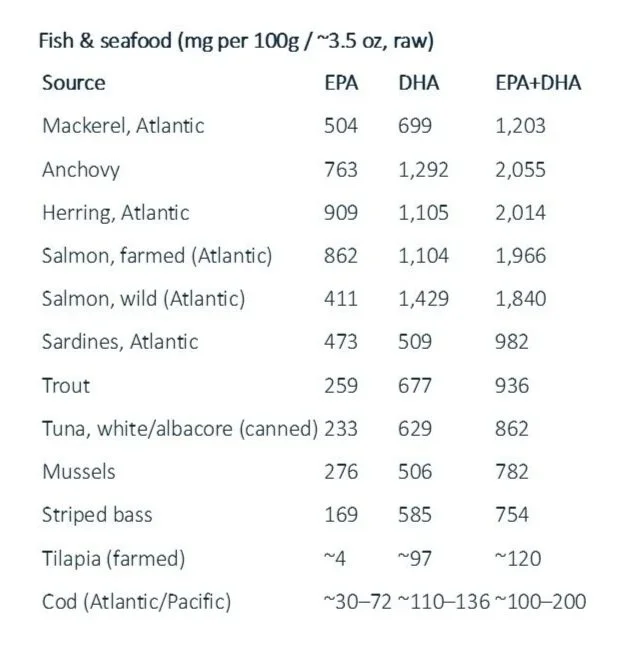
Source: Mozaffarian & Wu (2017). (Ref)
Based on this data, the frequently advised two x 150g of salmon weekly would be roughly equivalent to a combined 750g/d of LC omega-3, (~ 535 g/d DHA and 215 g/d EPA). The use of genetically modified canola might mean this would be higher in 2026 if consuming farmed salmon.
Alternative sources
Not everyone likes fish; it can be pricey; and the fish industry presents ethical and environmental quandaries. Moreover, supply has been an ongoing challenge.
Until recently, the total supply of fish was limited, as even farmed fish relied on an inelastic supply of wild-caught fish to feed them. (Ref) To meet demand, until recently, farmed fish diets have year-to-year contained lower fish meal and been progressively padded out with other foods. Consequently, LC omega-3 content fell in farmed fish output.
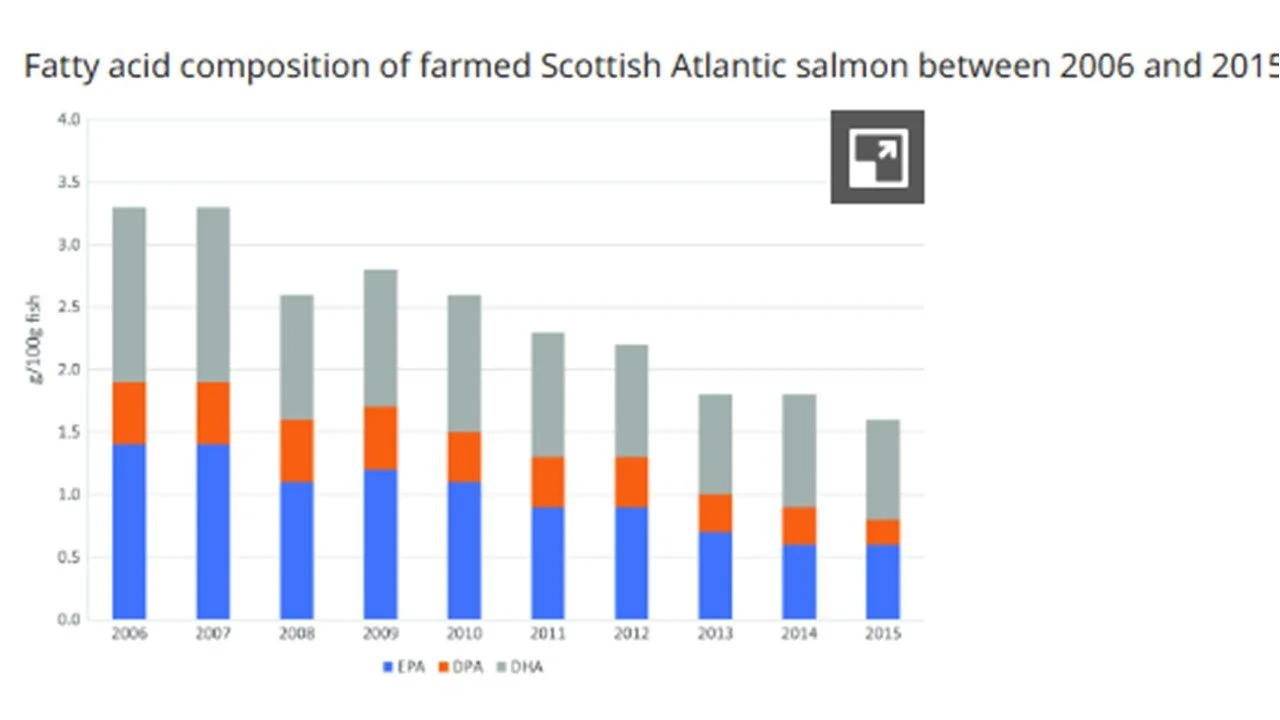
Source: Innes and Calder (2020). (Ref)
Fortunately, a couple of innovative solutions have emerged.
Genetically modified canola
The main player in this space is Aquaterra, a genetically-modified LC omega-3 rich canola developed by the CSIRO and commercialised by Nufarm as fish feed. (Ref, Ref) In trials, the canola nearly doubled the DHA content of farmed salmon. (Ref) The Australian and New Zealand Food Standards Authority (FSANZ) has also approved the product as “an alternative source of DHA in products currently enriched with fish oil [except infant formula]”. (Ref) Reading between the lines, this disintermediates fish as necessary from the process. Yes, on the one hand, it’s GMO and grown with glyphosate (Nufarm developed it after all). On the other, it necessitates less marine damage, lowers other contaminants and improves fish welfare.
Algae
Algae are the primary producers of DHA and EPA in the marine ecosystem and provide fish with their LC omega-3. Refined algal oil is available as supplements, where it is interchangeable with fish oil based supplements, (Ref, Ref). It is also used as a source of LC omega-3 in fish and animal feed. (Ref)
For now, algal LC omega-3 remains a niche market, but algae, as fast-replicating, single-celled organisms, lends itself to natural genetic selection (no GMO required), making this a very interesting area for many applications. (Ref, Ref)
Measurement
Estimating status from dietary intake is a practical surrogate but:
omega-3 content of food can vary from published values (see salmon chart);
Supplements can become oxidised and less effective;
Absorption and metabolism can vary between people; and
Interconversion rates between ALA, EPA and DHA also vary.
Therefore, in the same way measuring blood vitamin D or iron can guide nutrition advice, measuring LC omega-3 status is also a useful tool. Typically, LC omega-3s are measured in blood plasma or red blood cell membranes, where the former reflects recent consumption and conversion while red blood cell content indicates average supply over ~120 days. (Ref) The Omega-3 Index measures EPA + DHA as a percentage of all red blood cell membrane fatty acids, where ≥8% is associated with the lowest risk of heart disease. (Ref) Tests are available in Australia as a venous blood collection or as an at home finger-prick test which has shown good reliability and is approved by the Therapeutic Goods Association (TGA). (Ref, Ref) Both types of test are an out-of-pocket expense though, except for pregnant women in South Australia, where the testing is routinely performed for free.
Data from omega-3 blood tests reveals the following map, suggesting LC omega-3 blood levels are most influenced by intake, though a disappointing outcome in the Mediterranean region. (Ref, Ref)

Stark et al (2016). (Ref)
Yes, okay I get all that but what will they do for me?
Cohort studies suggest more fish = better health, which is a good starting point. A meta-analysis of 17 prospective cohort studies (comprising many of the famous studies in the field) found that, compared to low blood LC omega-3 levels, high levels were associated with 15-18% lower mortality risk 16 years later. The main benefit related to cardiovascular disease but cancer deaths and deaths from other (unspecified) causes were also lower. You’ll want to know, as I did, what these protective levels of LC omega-3s were. The red blood cell levels of the 10th and 90th deciles were 3.5% and 7.6%, respectively. (Ref) So, back to that 8% level again. Remember though, that high levels would likely have entailed replacement of other less healthy food with fish, so it may have been this removal that was responsible for the benefit as much as the addition of fish.
A sidebar: Below we look at trial evidence for LC omega-3s. Trials invariably use supplements, which is an artificial situation but it facilitates dose accuracy in trial situations and eliminates the substitution effect as well as lifestyle factors or corollary benefits accrued from fish nutrients. The evidence presented below is not intended to suggest supplements are the only option, or indeed the best option, for raising blood omega-3 levels.
Cardiovascular disease (CVD)
Observational studies show inverse associations between fish consumption and heart disease. (Ref) Moreover, LC omega-3 intake can reduce triglycerides, total cholesterol (EPA only), resting heart rate, blood pressure and lower inflammation. (Ref) Trials have also shown benefits for stabilisation of coronary artery plaque and EPA (though not DHA) lowered artery plaque volume. (Ref) Yet, when put to the test with several large, long and well-designed trials, results are mostly underwhelming. Why should this be and what can we conclude?
Here are the main trials (acronyms abound): GISSI-Prevenzione (1999) (Ref), JELIS (2007) (Ref), Alpha Omega (2010) (Ref), ASCEND (2018) (Ref), VITAL (2018) (Ref), REDUCE-IT (2018) (Ref), STRENGTH (2020) (Ref) and OMEMI (2020) (Ref).
Dose: The positive trials (GISSI, JELIS and REDUCE-IT) used doses of 1–4 g/day, while lower doses all produced null results. (Ref)
Formulation: REDUCE-IT and JELIS used EPA alone; STRENGTH, VITAL, ASCEND, and OMEMI all used EPA + DHA, where EPA is generally more effective in reducing CVD risk than an equivalent dose of combined EPA + DHA. (Ref)
REDUCE-IT’s placebo: REDUCE-IT found significantly in favour of EPA but used mineral oil as its placebo, which saw an increase of ~30% in the placebo group’s inflammatory markers, possibly flattering EPA in comparison.
Background fish intake: High background fish intake could reduce the contrast between the placebo and LC omega-3 groups. A VITAL secondary analysis found a stronger effect in people with lower baseline fish intake.
Background medical management: The same argument applies as to background fish intake. Concurrent statin treatment may explain STRENGTH’s null result. (Ref)
Primary vs. secondary prevention: positive trials (GISSI, JELIS, REDUCE-IT) enrolled patients with existing CVD or at high risk of CVD making it easier to show an effect as adverse cardiac events would have been higher in these subjects.
Summing it up, a 2020 review concluded that LC omega-3 supplementation was associated with a 9% reduction in cardiac deaths; a 10% reduction in major cardiac events, which included a 17% lower risk of heart attack. These effects were most apparent at higher doses, especially of EPA and in people with established heart disease. (Ref) The Australian Heart Association recommendations reflect this evidence body.
Brain and nervous system
In the nervous system, DHA is the most abundant LC omega-3. As adults are mostly poor converters of ALA (and EPA) to DHA, consuming pre-formed DHA is usually advised. This is the lower risk strategy, but there is a school of thought that suggests the DHA conversion rate is low because it doesn’t need to be higher. Human adult brains only require 2.4–3.8 mg/day of DHA for maintenance which implies needs are low, at least in adults. (Ref) Taking another perspective, long-term vegetarians and vegans, who derive DHA solely from ALA generally have lower plasma DHA levels but do not experience higher rates of neurological disease. (Ref) However, it may be that plant-based diets confer other advantages, which offset the risk from lower DHA. (Ref) In any case, the idea of fish for brain health persists. And not without some basis. How so?
Depression
Lower blood LC-omega-3 levels are a common finding in people with depression, including pre-and post-natal depression. (Ref, Ref) And there is good evidence for benefits from supplemental EPA in managing depression (Ref, Ref) This has lead the International Society for Nutritional Psychiatry Research to recommend: 1–2 g EPA or EPA + DHA (where EPA by weight comprises more than two-thirds of the formulation) for the treatment of major depressive disorder. (Ref)
Cognitive decline.
Some definitions: Mild cognitive impairment (MCI) is not a normal part of ageing, nor is it dementia. However, it may progress to dementia. Dementia describes a collection of symptoms caused by several disorders, where Alzheimer’s Disease is the most common. (Ref)
A 2023 review collating population studies and clinical trials summated:
Population studies show fish or LC-omega-3 intake was associated with reduced risk of developing MCI and/or Alzheimer's disease.
DHA supplementation in randomised controlled trials improved cognitive capacity in people with MCI but not with Alzheimer’s Disease.
In people who did not have MCI but who had heart disease EPA + DHA slowed cognitive ageing in about half the trials assessed. (Ref)
The doses, durations and patient cohorts were so variable across the various studies that it’s hard to pinpoint an ideal dose and LC-omage-3 are not officially recommended in any guidelines. Many trials clustered around 1-2 g/d but were quite short term. (Ref) As brain DHA turns over very slowly, much lower levels are likely adequate if habitually consumed from a younger age. Benefits in older people are unlikely to be explained by increased brain DHA and are more likely due to lower inflammation and improved heart function. When weighting up the optimal course of action, it’s important to remember that there are some downsides (later, later) to high dose LC omega-3s which should give pause to any plan to go for broke.
Pregnancy and birth
In the last trimester of pregnancy, the foetus needs an estimated 67 mg/d of LC omega-3, of which some two-thirds is DHA and which is supplied by the mother. (Ref, Ref) Despite this, establishing evidence that maternal DHA supplementation either before birth or during the breastfeeding period, improves maternal or child outcomes has been tricky. (Ref, Ref) The area with the most evidence is for premature birth.
Premature births
In Australia, around 8% of babies are born prematurely, with preterm birth accounting for some 85% of perinatal complications and deaths. Moreover, the last trimester of pregnancy is an important period for LC omega-3 accrual in the foetal brain.
In the 1980s, observations from the Faroe Islands highlighted that oily fish consumption was linked to longer gestation and higher average birthweight. Subsequently, the ORIP trial determined that supplemental DHA could reduce preterm birth in women with low baseline DHA. Consequently, in 2021, Australian dietary LC omega-3 recommendations for pregnancy were increased and in South Australia, LC omega-3 testing became freely available for pregnant women. It’s interesting to note that about 17% of tested South Australian women have low LC omega-3 levels (<3.7% DHA+EPA), about a third are marginal and half are replete. (Ref, Ref)
Reviewed in August 2026, the National Health and Medical Research Council currently does not recommend routine LC omega-3 supplementation. Their rationale is that, while supplementation benefits women with low LC omega-3, there is some evidence that high dose supplementation can increase preterm birth risk in women who are replete. (Ref, Ref). With the benefit of testing, in South Australian women with LC-omega 3 <3.7%, supplementation of 1000 mg/d of LC omega-3 of which 600mg is DHA, until 37 weeks’ gestation is advised. (Ref)
Other conditions
The same review cited above also collated research on the impact of LC Omega-3 supplementation in pregnancy on many other conditions with findings outlined below.
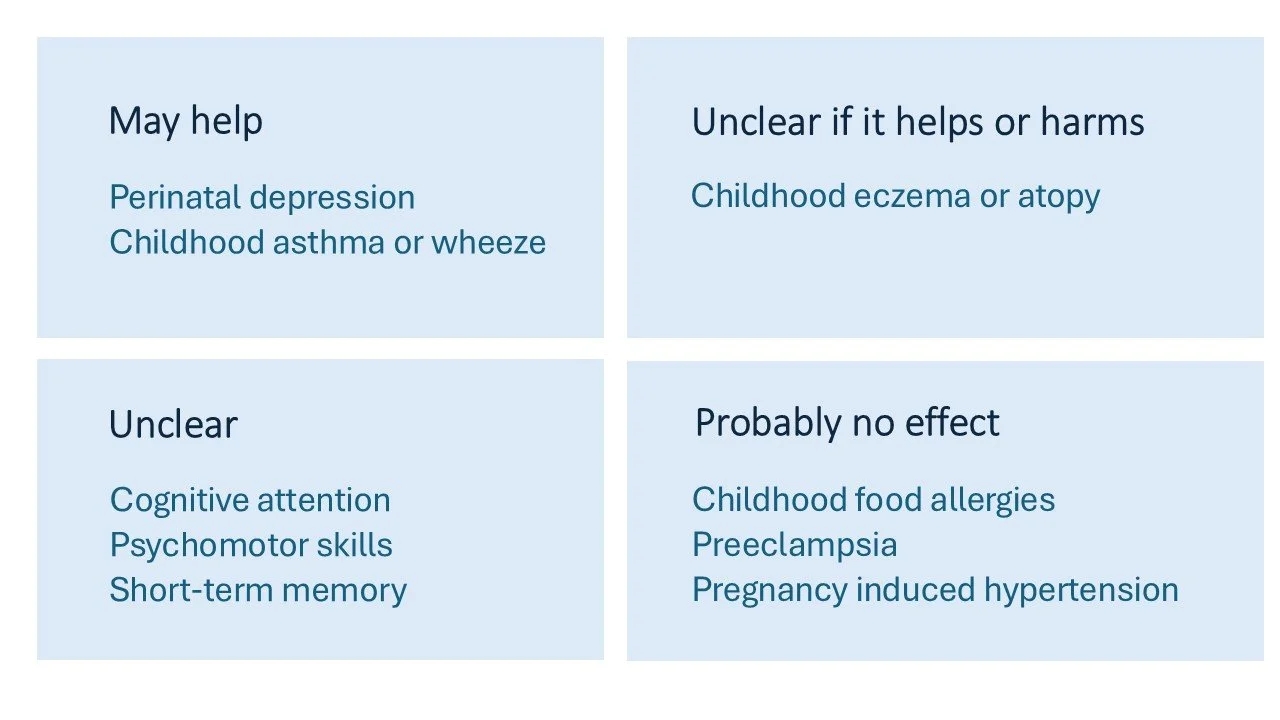
Data source: Australian Pregnancy Care Guidelines Omega 3 fatty acids (2026). The Living Evidence for Australian Pregnancy and Postnatal Care Guidelines Group. (Ref)
Vision
Unmentioned in the review was visual development. Some studies suggest maternal prenatal DHA supplementation can improve vision in babies, particularly in those born early or when the mother’s background DHA intake was low. (Ref)
Babies, children and adolescents
Studies into the benefits of LC omega-3 in children of all ages come to diverse conclusions. It’s probably the case that very low levels in children of any age are detrimental, perhaps more so at particular life stages, but that beyond a threshold it’s hard to discern an advantage. It could also be that other healthy dietary and lifestyle factors associated with fish intake have not been completely stripped out of observational analyses (though researchers will invariably make valiant efforts to do so).
The DIAMOND randomised controlled trial exemplifies a threshold effect. It tested four DHA levels in infant formula (0%, 0.32% 0.64%, 0.96% of total fatty acids), where 0.32% is the global breast milk average, in exclusively formula-fed babies. Babies receiving 0% DHA had poorer vision, but all other levels achieved equivalent visual development. (Ref, Ref) Consequently, the EU mandated DHA inclusion in infant formula. (Ref, Ref) Conversely, in a much debated decision, FSANZ permits, but does not mandate, DHA inclusion. (Ref)
Another review also updated last month - a most productive month - perhaps demonstrates how other healthy nutrition and lifestyle factors can muddy the water. It reported observational studies find higher breastmilk DHA is linked to better childhood motor, cognitive, and behavioural outcomes and reduced allergies. Yet, although DHA supplementation increased breastmilk DHA, the review was underwhelmed by the evidence for maternal DHA supplementation during lactation to improve outcomes in any of the same measures. (Ref)
Unlike the lactation data, in childhood, a 2020 research paper concluded that supplementation to attain an LC omega-3 Index >6% can improve cognition in children and adolescents. (Ref) Evidence also finds LC omega-3 supplementation can improve the symptoms of autism spectrum disorder (ASD) and attention-deficit/hyperactivity (ADHD), with the effect most apparent where baseline levels were low. (Ref)
Inflammation and autoimmune disease
LC omega-3s create a less inflammatory milieu through their conversion to anti-inflammatory molecules and direct suppression of pro-inflammatory markers. (Ref, Ref) These effects could partly explain many of the observed omega 3 benefits, but what about typical inflammatory conditions, such as auto-immune conditions and pain?
A comprehensive 2024 review found the best evidence for LC omega-3s in managing the symptoms of rheumatoid arthritis and systemic lupus erythematosus, but no conclusive evidence for an exhaustive list of other auto-immune conditions. (Ref)
As for pain, a 2026 study found headaches and migraine frequency reduced with high dose (1-2.5 g/d) supplementation over four months or more. It was comforting to note that the paper found, even at doses up to 6 g/d the worst documented side effects were nausea and burping, though these trials were relatively short term. (Ref) As for musculoskeletal pain, studies are surprisingly few in number, however there is modest evidence for LC omega-3 in the management of osteoarthritis and period pain. (Ref, Ref, Ref)
Downsides
A couple of note, yes.
Atrial Fibrillation
Atrial fibrillation (AF) is a cardiac arrhythmia which increases stroke risk. (Ref) An estimated 5% of the population >55y have AF, with lifestyle factors an important influence on risk. (Ref)
Data from REDUCE-IT, STRENGTH and OMEMI suggested a dose-dependent association between LC omega-3 supplementation and new cases of AF, particularly in relation to EPA. A UK regulatory report suggested a 10% risk of AF in patients taking 4 g/d EPA ethyl esters, implying risk is doubled in this group, assuming Australia and the UK have similar underlying rates of AF. (Ref)
However, we are concerned with doses around 1g/d. A 2021 review from the American Heart Association found a linear relationship between LC omega-3 dose and AF risk, with a 12% increase in AF risk per 1 g/d of LC omega-3 per day. (Ref)
Mercury
As we know observational studies show lower rates of chronic disease and mortality in fish eaters, and these effects occur despite any co-ingestion of heavy metals, toxic chemicals or microplastics, so there no need to panic!
Never the less, higher body mercury levels, generally a result of fish consumption, can counteract mortality and cardiovascular benefits. (Ref) Mercury is also particularly harmful to foetal and child neurodevelopment. (Ref) FSANZ has some good information on the subject, albeit in several different places. It sets ceilings on acceptable mercury exposures, which translates to the advice in the table below. (Ref, Ref) While the FSANZ has removed its three serves per week limit, the NSW Food Authority still suggests consumption of no more than three servings of low mercury seafood (including salmon, sardines and mackerel) weekly. (Ref)
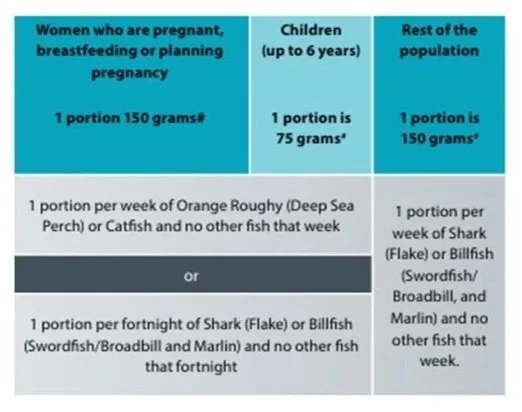
Source: FSANZ (2020). (Ref)
Supplements
LC omega-3s supplements can be derived from fish, krill or algae (Schizochytrium sp.). There’s no canola yet! And all can raise body levels of EPA and DHA. (Ref, Ref) very interesting though, while the EPA/DHA in fish oil is usually 60%/40%, in algal oil it is 33%/67%, making the later particularly interesting for pregnancy, but potentially useful overall as DHA is retro-converted to EPA at a rate proportional to body DHA levels. Normally supplements contain a fair portion of non LC omega-3 oil, so you need to look on the back for EPA and DHA content to check the dose/capsule. I’ve compiled a list of TGA listed supplements with 300 mg or more of combined EPA + DHA, and their EPA and DHA compositions here. There are over 500 LC omega-3 supplements listed on the TGA’s excellent database (here), which gives me some comfort that there’s enough interest in them that it was worth writing 5000 words on the topic!
Likewise, LC omega-3s can come in several forms (triglycerides, ethyl esters, re-esterified triglycerides, or phospholipids) and all increase blood levels to roughly equivalent levels. (Ref) A more important consideration is dose. Often this is fairly wimpy so you need to choose carefully. yAlso, supplement absorption is markedly higher when taken with a fatty meal that stimulates sufficient digestive enzymes for fat absorption. (Ref) Compliance is another factor to consider and the absence of “fishy burps” can be an attraction of algal supplements. (Ref)
As far as contaminants are concerned, the good news is that the TGA imposes fairly tight limits on fish oil and even tighter limits on algal oil supplement content of heavy metals (including mercury), dioxins and PCBs. (Ref, Ref) The TGA has no guidelines for krill oil (krill is a type of crustacean BTW) and, as krill is a keystone species in the Antarctic food chain, it’s better preserved for its natural predators than for use in supplements. (Ref) (Ref)
One final consideration is storage. LC omega-3s are prone to oxidation, which is renders your supplement, not so much harmful, but less effective. The TGA is on it though and limits LC omega-3 oxidation products (Peroxide, anisidine, TOTTOX) in fish oil and again even more tightly limits them in algal oil. (Ref, Ref) Thus in choosing a supplement, once you’ve found the appropriate dose, you should look for a product with a TGA listing number, where oxidation has been assessed. Then once at home, use them promptly and keep them in the fridge and out of light. (Ref)
Conclusion
Well that was a lot wasn’t it. But LC omega-3s are subject to so much marketing and often spurious health claims that it’s worth taking the time to understand the evidence and how to apply it in your life. The easiest option in healthy people is consuming fish or, if you have issues with fish, supplements, with your intake averaging out to 0.5-1 mg/d, of combined EPA and DHA. Evidence suggests this will lower your risk of heart disease and possibly several other conditions if habitually consumed. It’s also worth measuring your omega-3 index yearly and using the outcome to course correct if required. Finally, you can get too much of a good thing as we’ve seen so opt for an optimal not a maximal amount.
