
Magnesium - for if you’re not sick but not quite well

Introduction
And so we reach the final article in the bone health series. To recap the articles, they were: an overview of various factors for bone health, calcium, vitamin D, vitamin K and now magnesium.
Magnesium is the ultimate multi-tasker in the body and thus any shortfalls tend to be felt on multiple fronts but in a fairly subtle fashion that may just manifest as just general “meh-ness”. Magnesium is abundant in plant food and if we all ate more of the foods we’re supposed to we’d probably get enough, but we don’t so may not. Let’s look at this mineral and what it does. And let’s see what can go wrong when our Magnesium levels fall short.
Magnesium: Perfect you and you IRL
Here are the Australian recommended dietary intakes.
| Age | Males (mg/d) | Females (mg/d) | Pregnancy and Lactation (mg/d) |
|---|---|---|---|
| 0-6 m | 30 | 30 | |
| 7-12 m | 75 | 75 | |
| 1-3 y | 80 | 80 | |
| 4-8 y | 130 | 130 | |
| 9-13 y | 240 | 240 | |
| 14-18 y | 410 | 360 | 400/360 |
| 19-30 y | 400 | 310 | 350/310 |
| 31-50 y | 420 | 320 | 360/320 |
| >51 y | 420 | 320 | |
Data source: National Health and Medical Research Council, Nutrient Reference Values (2017). (Ref) Note that there is an adult upper limit of 350 mg/d in men and women.
And here’s what we actually consume by sex and age group in milligrams per day (mg/d):

Data source: Australian Bureau of Statistics, National Nutrition and Physical Activity Survey (2023). (Ref)
So, it’s all good until puberty for both sexes. Women between 30 and 50 generally (just) get enough but fall short over 50 y, while men fall short in all age groups. If you look at the list of rich magnesium sources you might see why. These are not the foods to which men tend to cleave.
Sources
Here seeds are your friend, with pumpkin seeds a standout. Most dried spices also have excellent levels, for instance cumin has ~350 g/100g and nuts also generally have 100-200 g/100g. Of course, with all of these foods, you only eat a few grams at a time. Legumes, wholegrains and green vegetables are all good sources, (generally ~70 mg/100g cooked weight), as is anything with chocolate- a pleasing thought. Animal products are fairly poor choices and processed foods are often stripped of their fibre which removes the magnesium at the same time. In some parts of the world, drinking water contains substantial magnesium, but not so in Australia. (Ref)
| Food Name | Magnesium (mg/100g) |
|---|---|
| Cocoa powder | 590 |
| Pumpkin seeds | 530 |
| Wheat bran | 450 |
| Chia seeds | 380 |
| Sunflower seeds | 370 |
| Brazil nuts | 350 |
| Poppy seeds | 347 |
| Linseed | 330 |
| Tahini (sesame seeds) | 320 |
Data source: Food Standards Australia New Zealand, AUSNUT 2023. (Ref)
As with calcium, phytate and oxalate can reduce absorption by binding magnesium. Phytate is a component of whole grains, legumes, nuts and seeds but can be broken down by soaking, sprouting and fermentation to enhance magnesium uptake. Your gut bacteria can do some of the work in your colon too.
Oxalate is found in high amounts in spinach, beet greens, rhubarb and Swiss chard. None of these are likely to be a major part of your diet. Nevertheless, boiling can partially break down oxalate, while, as an element, magnesium is not broken down, though 10-15% might be lost through leaching into the water. (Ref, Ref)
So what does it mean if we don’t eat enough?
True hypomagnesaemia (low magnesium) is rare (as is hypermagnesaemia - too high), and it’s usually diagnosed when blood serum magnesium levels are <70 nmol/L and clinical signs of overt deficiency manifest. But, just like calcium, serum levels are tightly regulated, so only show shortfalls when deficiency is pronounced, so this is not very useful as a signpost of chronic modest shortfalls, which is what most of us should be more concerned with.
Severe deficiencies can cause seizures and heart arrythmias but symptoms of mild inadequacy are rather vague: loss of appetite, nausea, fatigue, and weakness. We all feel this way sometimes and there could be any number of reasons. However, given many people consume insufficient magnesium, we must assume sometimes this is the reason. (Ref, Ref)
Magnesium in the body (calcium’s buddy and rival)
Magnesium is the fourth most common element in the body after calcium, sodium, and potassium. Some 50–60% is found in bones and teeth and about a quarter in muscles but it’s also found in every cell and is somewhat of a jack-of-all-trades.
You may recall from high school that magnesium sits directly above calcium in the periodic table and that they both have a 2+ charge. Consequently, magnesium behaves like calcium in many respects and can sometimes substitute for calcium in the body, which offers a variety of benefits (more on which later).
Total body magnesium is only ~25 g, compared to about 1kg of calcium but the body’s mechanisms to maintain balance are very similar.
Absorption of both calcium and magnesium is generally less than half the amount consumed, hence changes in fractional absorption are a key swing factor in the amount delivered to cells.
The nutrient reference values assume an average absorption rate but (to a point) active absorption can flex up and down to meet bodily needs.
Active absorption accounts for a greater proportion of absorption when needs are greater, for instance during pregnancy, or when the mineral content of food is low. Vitamin D also influences active magnesium absorption but much less so than for calcium. (Ref)
Passive absorption is a constant proportion of mineral ingested and, for magnesium sits at about 7.5%, a little less than calcium.
Like calcium, any excess magnesium absorbed is rapidly excreted in the kidneys to maintain balance in the body.
Also like calcium, both intestinal absorption increases and urinary losses fall in response to deficiency. (Ref, Ref, Ref, Ref)
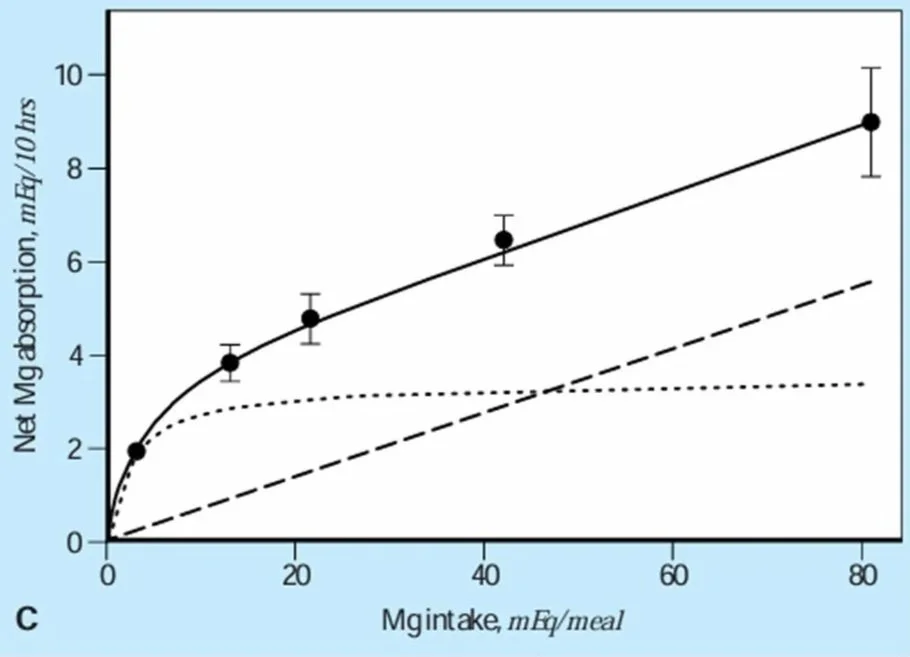
Intestinal magnesium (Mg) absorption, with active absorption (dotted line) and passive absorption (dashed line). Source: McCarthy and Kumar (1999). (Ref)
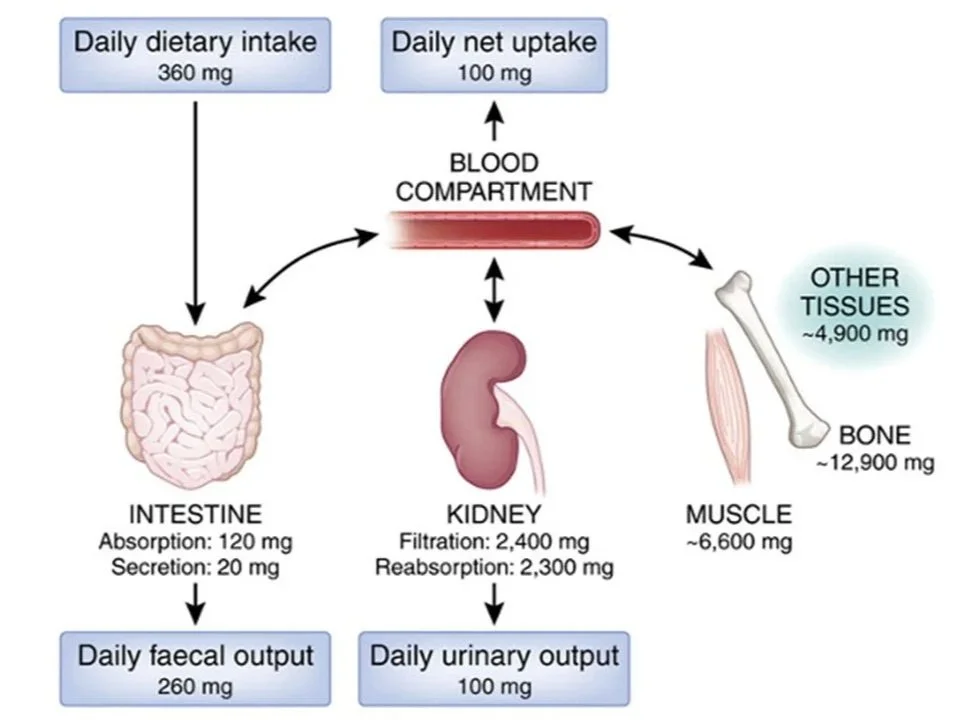
Magnesium in the body. Source: Dechent and Ketteler (2012). (Ref)
Age
Lower energy intake with age is likely to be accompanied by reduced magnesium intake. Intestinal magnesium absorption falls modestly with age also, though urinary retention rises. (Ref)
Perhaps a greater risk though is secondary deficiency due to concurrent use of many common drugs, including H2 blockers, proton pump inhibitors, antihistamines and antibiotics.
At the same time, bone reservoirs of magnesium become materially less labile, and thus bone is less useful for making up shortfalls in other depots. This is unfortunate as magnesium is very much required to participate in the enzyme reactions which offset the inflammation and oxidative stress common with increasing age. (Ref, Ref)
Magnesium in health and disease
In health:
Magnesium’s roles in the body are numerous. It’s a participant in hundreds of cellular reactions and also has structural functions. It is particularly important in energy generating reactions, explaining some of its importance with regard to muscular contractions of all types. Importantly as well, magnesium has demonstrated a consistent inverse association with oxidative damage and inflammation. (Ref)
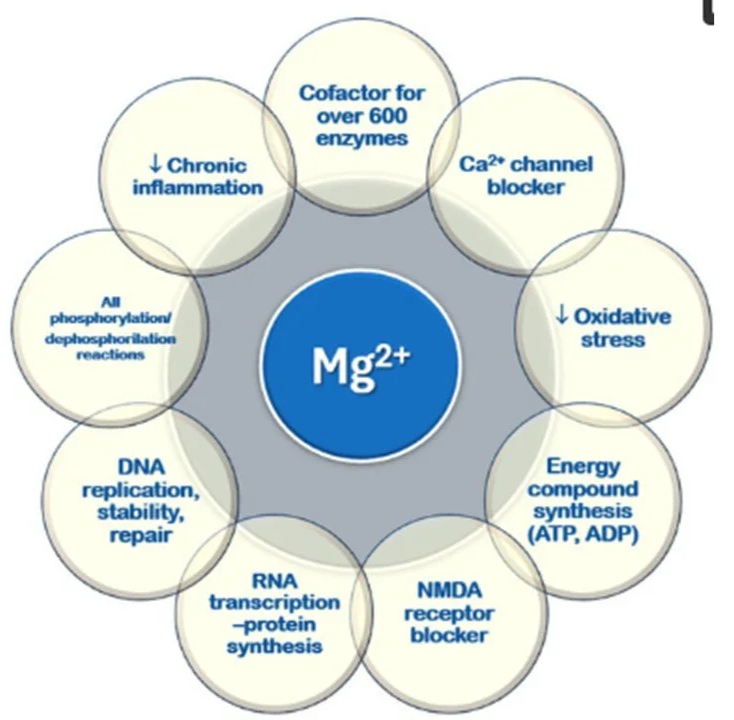
Magnesium’s functions in the body. ADP: adenosine diphosphate; ATP: adenosine triphosphate; DNA: deoxyribonucleic acid; NMDA: N-methyl-D-aspartate; RNA: ribonucleic acid; ↓: reduced. Dominguez et al (2025). (Ref)
And in disease:
As with other nutrients, it is again the case that observational research is more supportive of magnesium’s health claims than randomised controlled trials (RCTs), where the latter generally use supplements. Here, it must be noted that magnesium-rich foods are the types of foods which we are all encouraged to eat more of because of their many health benefits. Moreover, people that eat these types of foods, might tend to also be people who do things like exercise and go to bed on time. Observational research always attempts to adjust for these factors but it’s hard to do perfectly, perhaps explaining some of the discrepancy. Nevertheless, four conditions have better data than most for magnesium’s benefits. They are: high blood pressure, type 2 diabetes, osteoporosis, and migraine headaches (Ref, Ref). We will also discuss muscle actions and sleep
Blood pressure
There are a number of mechanisms via which magnesium may affect blood pressure, amongst which is its ability to relax vascular tone in blood vessels. (Ref)
Both observational and interventional studies show a small but significant benefit from adequate magnesium intake and status. Observational data suggests a U-shaped association between magnesium and hypertension, where serum magnesium of 0.66 – 1.44 mmol/L (Australian reference range 0.7-1.1 mmol/L) is associated with significantly decreased hypertension. It’s quite cool to see that water hardness (the concentration of dissolved minerals - mainly calcium and magnesium) in tap water shows correlation with cardiovascular disease, where hypertension is a major contributor this condition. (Ref) The following chart is from a meta-analysis of population data studies, where it was observed that it was magnesium, rather than calcium, which was the key driver of the protective relationship.
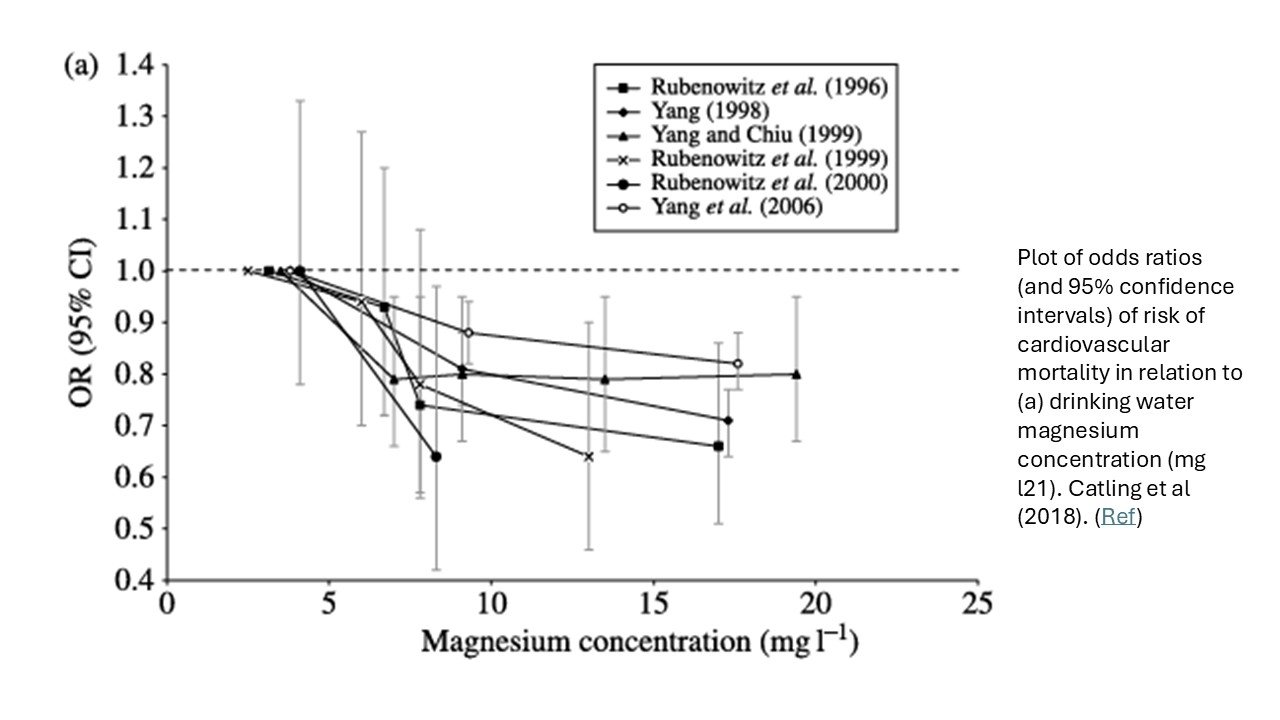
The odds ratios (and 95% confidence intervals) of risk of cardiovascular mortality in relation to drinking water magnesium concentration. Source: Catling et al (2018). (Ref)
The same results were found in interventional RCTs, with the best responses in people who had existing high blood pressure and low serum magnesium. In the linked study, various doses were used with no clear signal though median dose sat at around 300 mg/d. (Ref)
Type 2 Diabetes
A common complication of type 2 diabetes is heart disease.
Disturbed insulin secretion and sensitivity have been observed in magnesium-deficient animals, while population studies have shown low magnesium in blood serum and cells is common in diabetics.
In observational studies, the risk of T2D is about 20% lower when the highest quartile of magnesium intake is compared to the lowest. In RCTs, supplements also improved risk (measured by glycated haemoglobin [HbA1c]) but only up to about 300 mg/d (recall that this is on top of normal dietary intake). Above that, higher supplement doses saw increasing risk develop. (Ref, Ref)
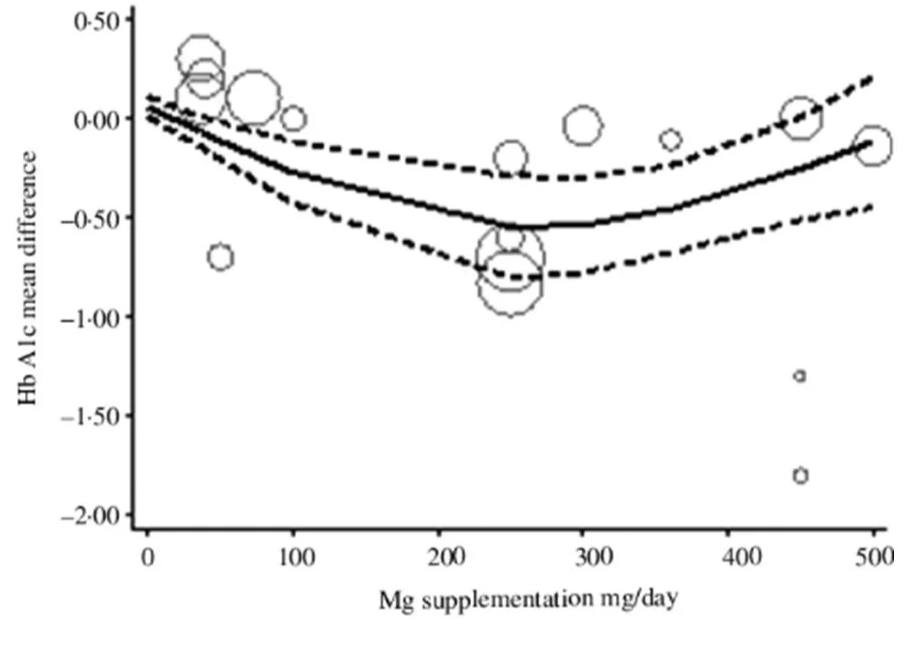
A U-shaped relationship is evident for magnesium intake and glycated haemoglobin (HbA1c) levels. Source: Asbaghi et al (2022). (Ref)
Osteoporosis
Magnesium’s structural role in bone is as an occasional substitute for calcium, where it appears to confer strength and flexibility to the bone lattice (Ref) If you like, it’s the steel to calcium’s concrete where the bone is reinforced concrete. Magnesium also plays a role in parathyroid hormone synthesis and vitamin D activation, which upregulate calcium absorption from the diet. (Ref, Ref) Thus we can explain how magnesium might both directly and indirectly contribute to bone strength.
Indeed, an association between magnesium intake as well as magnesium serum levels and bone mineral density (BMD) has been observed in men and women of all ages. (Ref, Ref, Ref)
As the gradations of BMD are easier to assess than the harder and rarer end-point of fractures, evidence that higher magnesium intake is correlated with lower fracture rate is more elusive. (Ref) However, women in the Osteoarthritis Initiative followed for 8 years did indeed have a 27% reduced risk of fracture when they met the recommended magnesium intake, compared to women who did not. (Ref) While a meta-analysis of observational studies also found low serum magnesium levels were associated with greater fracture risk. (Ref)
Interventional studies are surprisingly sparse. Osteoporosis has been experimentally induced in rats by magnesium deprivation. (Ref) In a small group of teen girls, magnesium supplementation improved bone density, but it may be that, as with calcium supplementation in teens, any increase is transitory. (Ref) In 20 post-menopausal women given 290 mg/d for 30 days, bone turnover was reduced as indicated by blood and urine sampling for biomarkers (see chart below). (Ref) While a dietary program emphasising magnesium in 19 women increased relative BMD (Ref) As did supplementation of 50-150 Mg per day in 23 post-menopausal women. (Ref)
The chart below shows urinary excretion of a pyridinoline (a byproduct of bone breakdown) at different levels of magnesium consumption. (Ref)
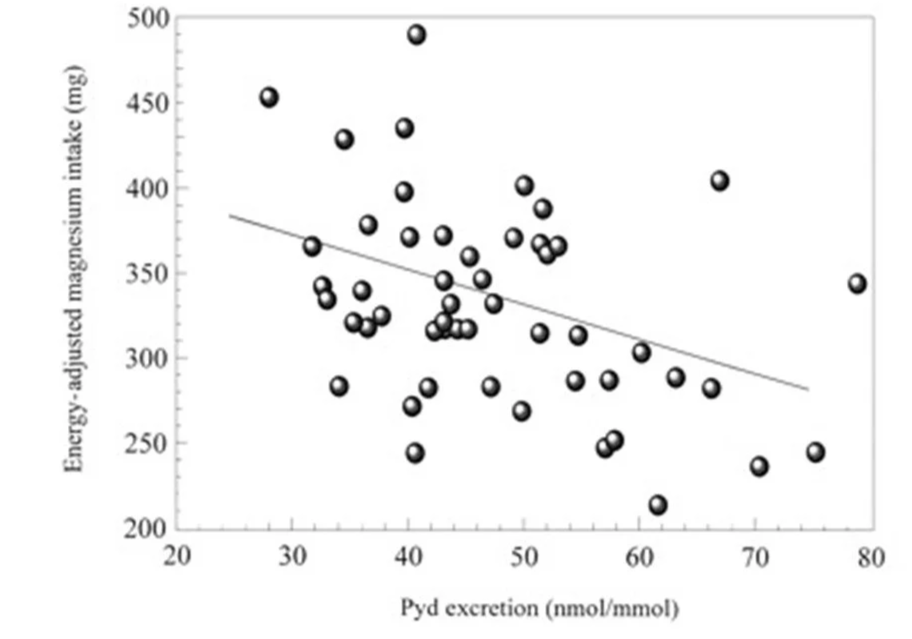
Correlation between energy-adjusted magnesium intake and pyridinoline (Pyd) excretion. r = –0.37, P < 0.005 The relationship held after adjustment for age, weight, height, and menopausal status. New et al (2000). (Ref)
Headache and migraines:
Sufferers will have skipped to this part first. Migraine is no joke.

While there is the best evidence for migraines, there is some evidence that magnesium may be protective in a range of other neurological conditions including chronic pain, epilepsy, Alzheimer’s disease, Parkinson’s disease, stroke, depression and anxiety. The mechanism may relate to magnesium’s ability to block calcium channels in specific brain nerve pathways to prevent oxidative stress and neuronal cell losses. (Ref) Magnesium’s role in muscle relaxation and blood pressure lowering properties may also be helpful.
Sufferers can take some heart here as, while it’s no panacea, data is quite positive. The US National Health and Nutrition Examination Surveys (NHANES) found migraine headaches reduced with increased dietary intakes. (Ref) Meanwhile, two recent meta-analyses of interventional trials have found intravenous magnesium offered relief for acute migraine, while oral magnesium reduced migraine frequency and intensity. (Ref, Ref) Oral indicated doses are at least 300 mg/d supplemental magnesium. (Ref)
And muscles?
You knew this was coming right?
The thing that most people know about magnesium is that it has something to do with exercise performance and muscle cramps. There are several ways it does this.
magnesium is at the centre of energy production and muscles are a big consumer of energy.
magnesium is a factor in DNA synthesis and thus cell division.
At a cellular level, while calcium promotes muscle contraction, magnesium promotes muscle release. These antagonistic actions, optimise muscle action and, of course, should reduce cramps. (Ref, Ref)
Medical areas where magnesium’s muscle relaxing effects are employed in acute medical settings include:
To prevent pre-term contractions and eclampsia
Some heart arrythmias
Asthma for bronchodilation (Ref)
Magnesium studies have shown that supplementation can improve strength and power but not consistently. The discrepancy may be down to whether or not muscle magnesium was already adequate before supplementation, suggesting, beyond a threshold there’s no further benefit. (Ref)
One final word: gels and bath soaks like Epsom salts don’t work for muscle relaxation (beyond their placebo effect - so sorry about that), as the skin does what it’s designed to do and acts as a barrier to magnesium incursions. (Ref, Ref)
And sleep?
Ah yes sleep. Something no one thinks much about until it becomes a problem. And magnesium may help on a number of fronts.
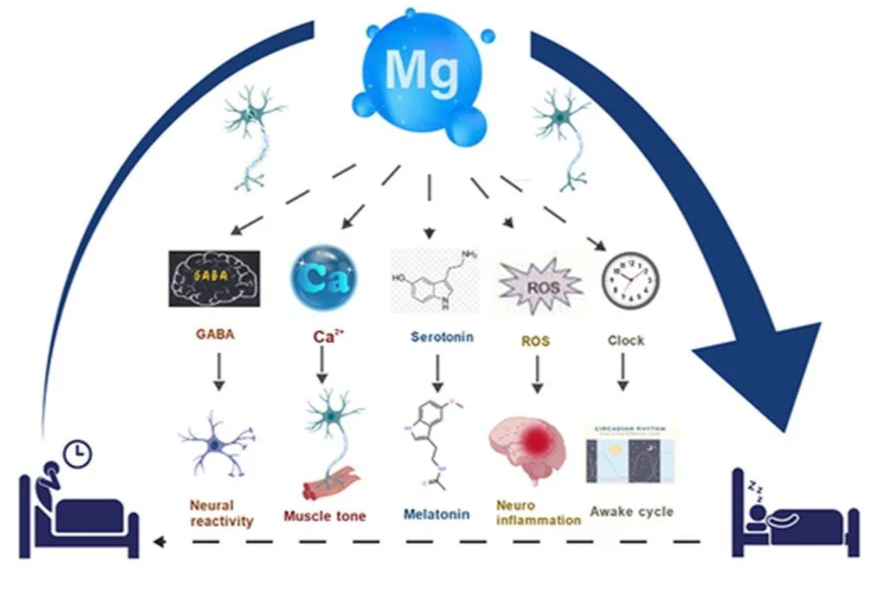
Magnesium may influence sleep on a number of fronts. He et al (2025). (Ref) GABA: Gamma-Aminobutyric Acid; ROS: Reactive Oxygen species
Indeed, Magnesium is associated with higher quality and longer sleep in observational cohorts and in interventional trials can reduce anxiety to induce better sleep. (Ref, Ref) Interventional trials overall do not show consistent sleep improvements and this may be due to baseline magnesium intakes and status. (Ref) Of particular interest, a trial of magnesium glycinate (150 mg magnesium and 1.54 g glycine) found improvements in sleep were greater when intake was deficient. This particular formulation is of specific interest as there is some evidence that 3 g/d of glycine supplementation can independently enhance sleep quality, although the amount was only about half this in this trial. (Ref)
Supplements
Now, magnesium is one food we should probably have a red hot go at getting from food, just because food sources are also the types of foods we should aim to eat. But if you can’t be bothered, have high blood pressure or one of the other conditions listed or want to self-experiment to see if magnesium supplementation improves your low-grade malaise, then here goes.
Evidence suggests the organic magnesium salt supplements (Magnesium citrate, glycinate, malate and lactate) are better absorbed than inorganic Mg salt supplements (oxide, hydroxide, carbonate and sulfate). Gluconate has demonstrated the best absorption of all salts and, while it can be more expensive is probably worth it. (Ref, Ref)
While, not a supplement, some medications for heartburn contain substantial magnesium as magnesium hydroxide, for instance Mylanta and Quick-Eze. These are very common and at first glance, the amount of magnesium may seem like a lot but only about 10-15% of the Mg in Mg(OH)2 is absorbed. Since it travels the length of the digestive tract though, it does have a laxative effect. (Ref, Ref)
You will have noted above that an effective adult supplement dose lies at about 300 mg/d (which sits below the upper limit). As well as absorption variation, different magnesium salts contain different proportions of elemental magnesium. It will be written on the container but here’s a table too.
| Magnesium salt | % elemental Mg | Approx Mg per 1000 mg | Organic or Inorganic |
|---|---|---|---|
| Magnesium carbonate (MgCO3) | 29 | 290 | Inorganic |
| Magnesium hydroxide (Mg(OH)₂) | 42 | 420 | Inorganic |
| Magnesium oxide (MgO) | 60 | 600 | Inorganic |
| Magnesium sulfate (Epsom salt) | 10 | 100 | Inorganic |
| Magnesium chloride | 12 | 120 | Organic |
| Magnesium citrate | 13 | 130 | Organic |
| Magnesium glycinate (bisglycinate) | 14 | 140 | Organic |
| Magnesium lactate | 12 | 120 | Organic |
| Magnesium L-threonate | 8 | 80 | Organic |
| Magnesium malate | 13 | 130 | Organic |
| Magnesium taurate | 8 | 80 | Organic |
Toxicity
Like calcium, because absorption reduces as dose increases, magnesium is a fairly innocuous nutrient. Nonetheless, the Australian Dietary Guidelines publish upper limits for supplements which is 350 mg/d for all adults.
In adults, true toxicity is generally limited to people with kidney disease and at it’s extremes this can be very serious and include coma and cardiac arrest. The most likely consequences for most adults however, is diarrhoea from excess unabsorbed inorganic magnesium in the gastrointestinal tract and indeed milk of magnesia is a common laxative (Ref, Ref)
Conclusion
High blood pressure, higher blood sugar, declining bone strength, poor sleep and fatigue…. it sounds like modern life. Maybe though it’s down to our poor diet, one specifically that’s light-on for magnesium? Could it be that the stressors constantly coming your way aren’t the cause of your problems but also a byproduct of suboptimal execution of the 600 enzymatic reactions involving magnesium? Perhaps, if you corrected your magnesium deficit all your problems would go away? Probably not, but you’ll never know if you don’t give it a go!
